Wallpaper Types: Vinyl, Non-Woven, Paper, and Peel-and-Stick
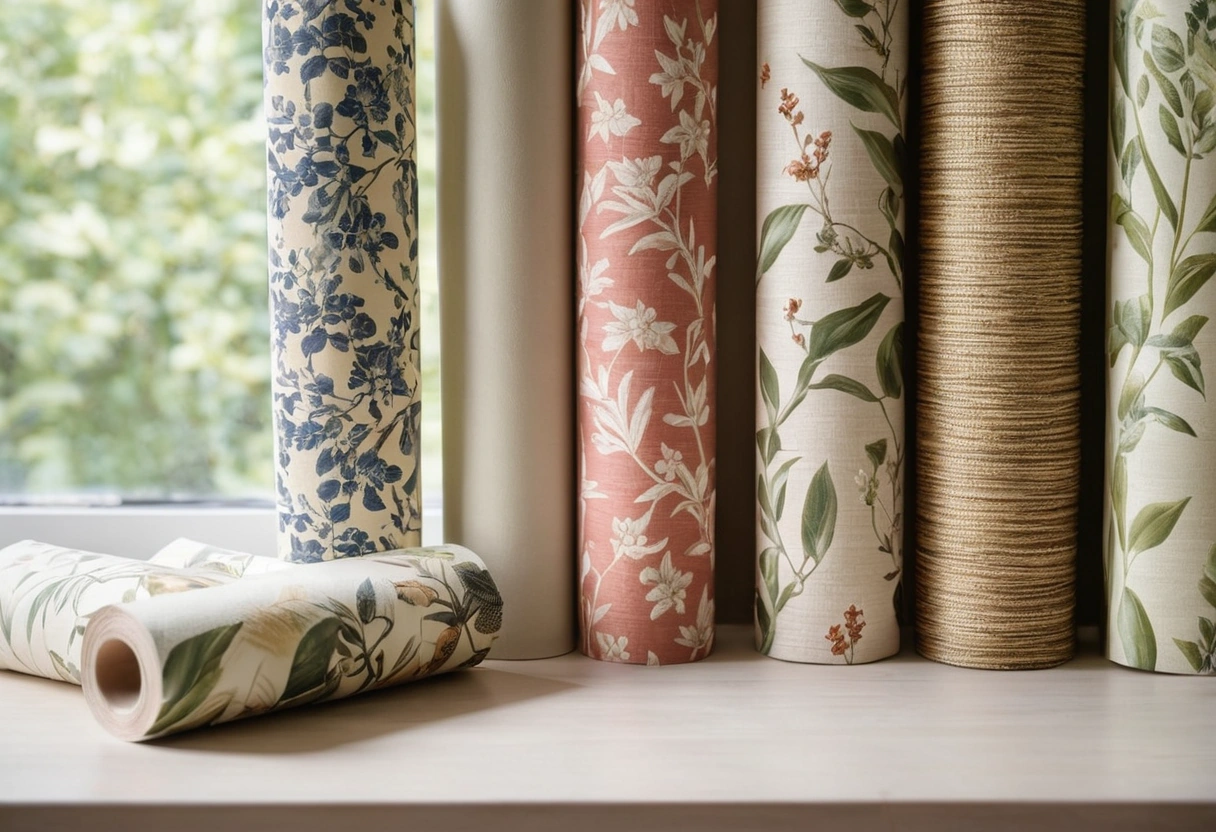
Five materials cover most of the wallpaper market: vinyl (scrubbable, survives bathrooms), non-woven (breathable, strips off dry), traditional paper (beautiful, fussy), grasscloth (real texture, no water ever), and peel-and-stick (renter-friendly). Typical cost runs $30 to $150 per double roll, with grasscloth and designer papers at $100 to $300. Plan on 22 to 25 usable square feet per single roll after pattern-repeat waste.
The five types, compared
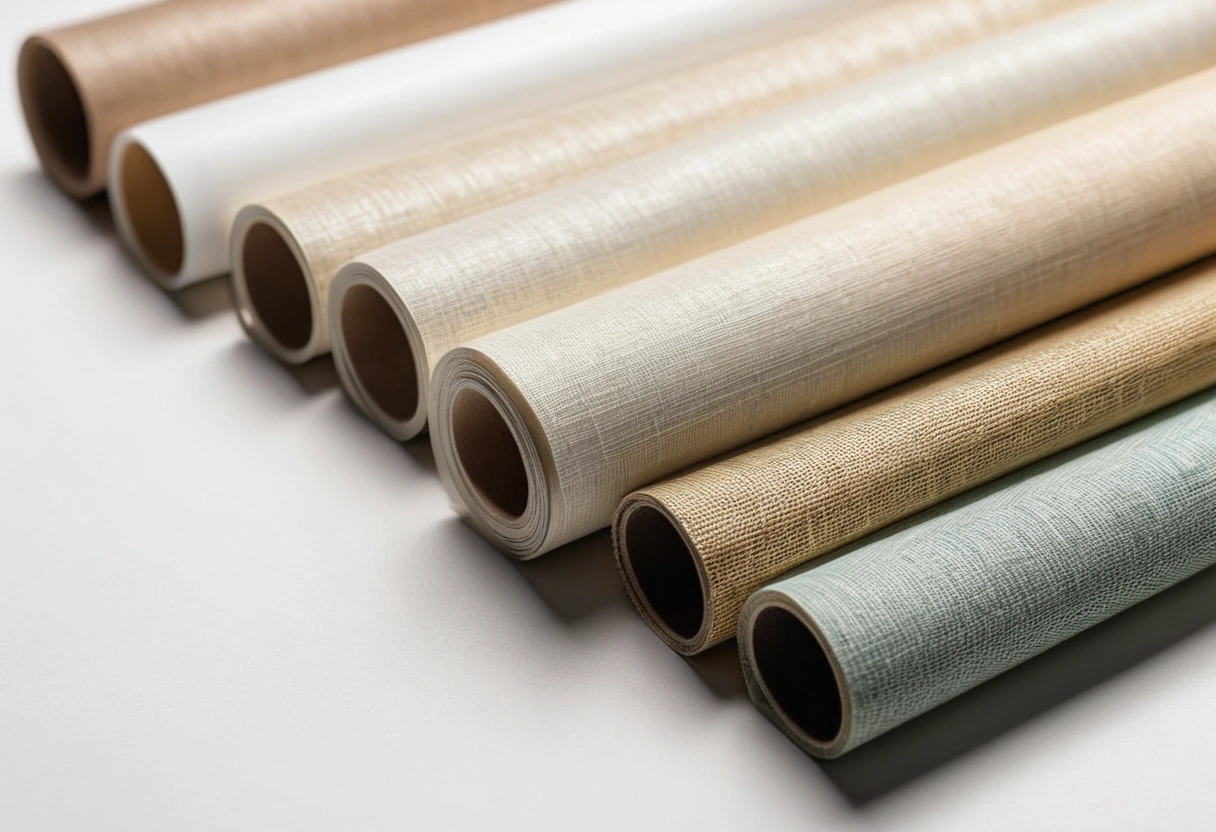
| Type | Wet rooms | Removal | Typical cost, double roll |
|---|---|---|---|
| Vinyl | Yes | Face peels; backing soaks off | $30 to $80 |
| Non-woven | With good ventilation | Strips dry, easiest | $50 to $150 |
| Traditional paper | No | Score, soak, scrape | $50 to $200 |
| Grasscloth | No | Slow, often damages | $100 to $300 |
| Peel-and-stick | Splash zones only | Pulls off; can lift paint | $30 to $100 |
Vinyl comes as solid vinyl or vinyl-coated paper; both wipe clean, and solid vinyl tolerates actual scrubbing. Non-woven is the modern default: a stable synthetic-blend backing that doesn’t stretch when wet, hangs by pasting the wall instead of the paper, and comes off dry in full sheets. Traditional paper prints beautifully and suits old houses, but it stains, tears, and demands a careful hanger. Grasscloth is woven natural fiber; the visible seams are part of the look, and a splash or a greasy hand can mark it for good. Peel-and-stick is a large vinyl sticker: repositionable, commitment-free, and happiest on smooth, glossy paint.
Where each type survives
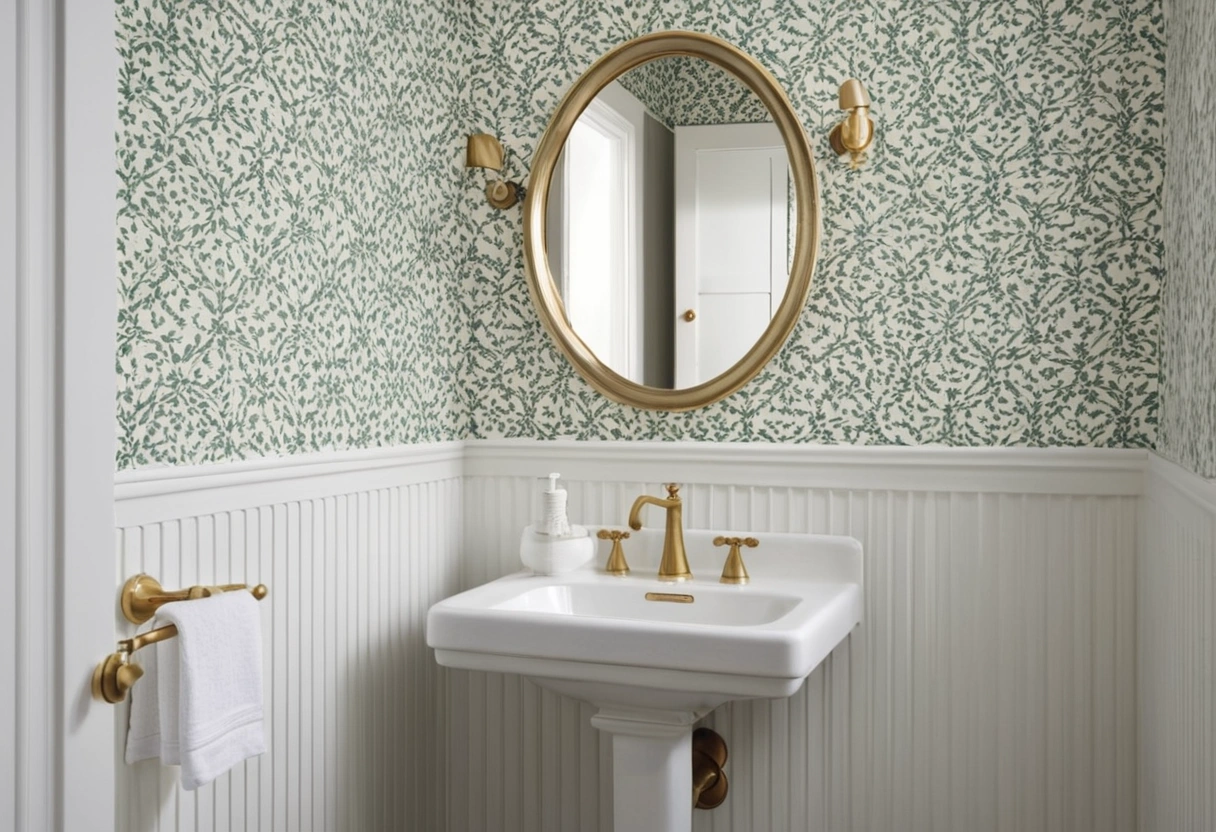
Powder rooms take anything with decent ventilation, which is why they’re the classic wallpaper room. Full baths with showers are vinyl territory, or well-ventilated non-woven kept out of the splash zone; either way, plan the pattern around the fixture spacing in our small bathroom clearances guide. Kitchens want scrubbable vinyl away from the range. Halls, stairs, and anywhere backpacks swing need vinyl or heavy non-woven; the traffic logic from our entryway design guide applies to the walls as much as the floor.
Bedrooms, living rooms, and dining rooms are open season, including paper and grasscloth. Rentals get peel-and-stick, with one caution: test a panel in a closet for a week first, because on builder-flat paint it can take the paint with it. South-facing rooms fade every material, so favor lighter grounds there.
Roll math: coverage and pattern repeat
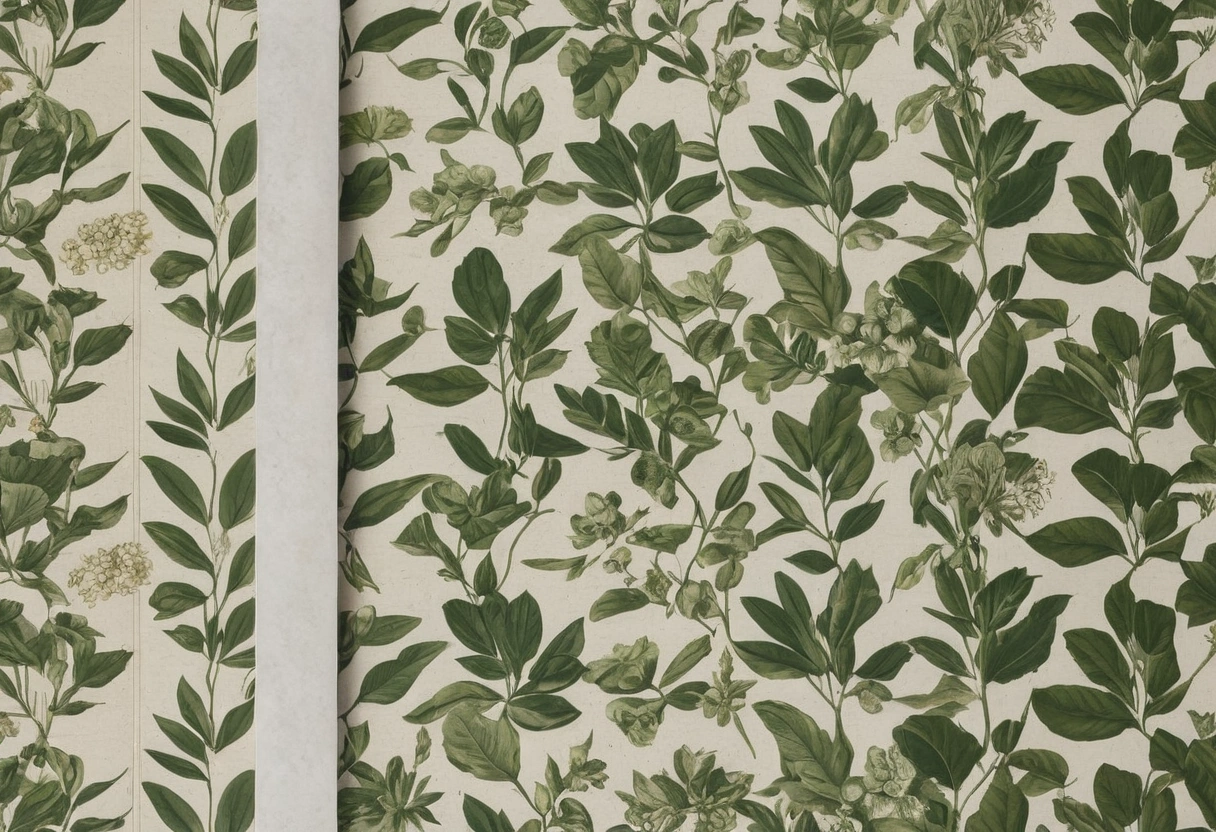
An American single roll is about 27 inches wide by 13.5 feet long, roughly 30 square feet, and it’s almost always sold as a double roll of about 60. European metric rolls run about 20.5 inches by 33 feet, near 56 square feet. The planning convention that keeps you out of trouble: count on 22 to 25 usable square feet per single roll once trimming and pattern matching take their share.
The worked example: a 10 by 12 foot room with 8 foot ceilings has a 44 foot perimeter, so 352 square feet of wall. The trade convention is to subtract only oversized openings, not standard doors and windows. At 25 usable feet per single roll that’s 14 single rolls, or 7 doubles. Then check the repeat printed on the label: a straight or drop match over 18 inches drops the usable yield toward 20 square feet per roll, which on this room means ordering one more double roll. Every roll must come from the same batch or dye lot number, and 10 to 15 percent overage is cheap insurance, since a reprint rarely matches.
Removal: what you’re signing up for
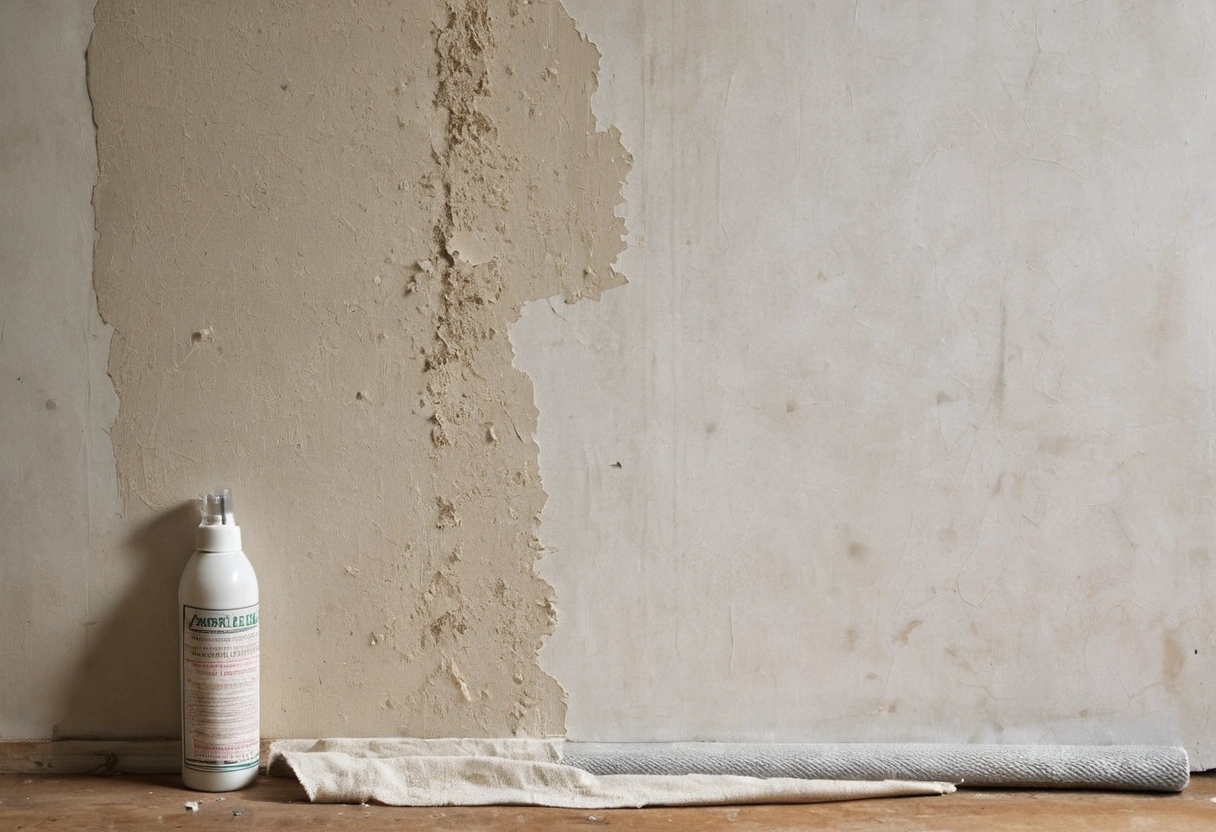
Non-woven is the easy exit: grab a corner and it strips dry in full sheets. Peelable vinyl comes off in two acts, the face peels away, then the paper backing needs a soak and a scraper. Traditional paper is the weekend you’re dreading: score, soak with stripper or steam, scrape, repeat, and mind the drywall face under aggressive scoring. Peel-and-stick pulls off cleanly from glossy, well-cured paint and can flake cheap flat paint off with it.
Prep now determines removal later. A wall primed and painted in eggshell or satin, per the ladder in our paint sheen guide, releases any of these far more gracefully than bare drywall, which is the classic removal horror story.
Cost, installation, and the sample step
Hanging costs typically run $25 to $60 per double roll from a pro, or $2 to $6 per square foot, more for grasscloth, tall stairwells, and large drop matches. The DIY ladder from easiest up: peel-and-stick (still snap a level line; ceilings lie), paste-the-wall non-woven, pre-pasted papers, then traditional paste-the-paper goods, with grasscloth best left to a pro because seam placement is the whole game.
Before committing to any of it, order a sample and tape it up for a few days, the same discipline as testing paint colors through morning and evening light. And weigh the alternative: a bold paint treatment like color drenching delivers a similar hit of commitment for a fraction of the material cost, while wallpaper answers back with pattern and texture paint can’t fake.
The order-sheet checklist
- Measure perimeter times height; subtract only oversized openings.
- Divide by 22 to 25 usable square feet per single roll; repeats over 18 inches drop that to about 20.
- Order 10 to 15 percent extra, all one batch number, plus a labeled spare roll for repairs.
- Baths and halls: vinyl or heavy non-woven. Rentals: peel-and-stick, tested in a closet first.
- Confirm the match type on the label, straight, drop, or random, before ordering.
- Keep the leftover roll; patching beats reordering a dead dye lot.