Curtain Length and Fabric: Measurements That Look Custom
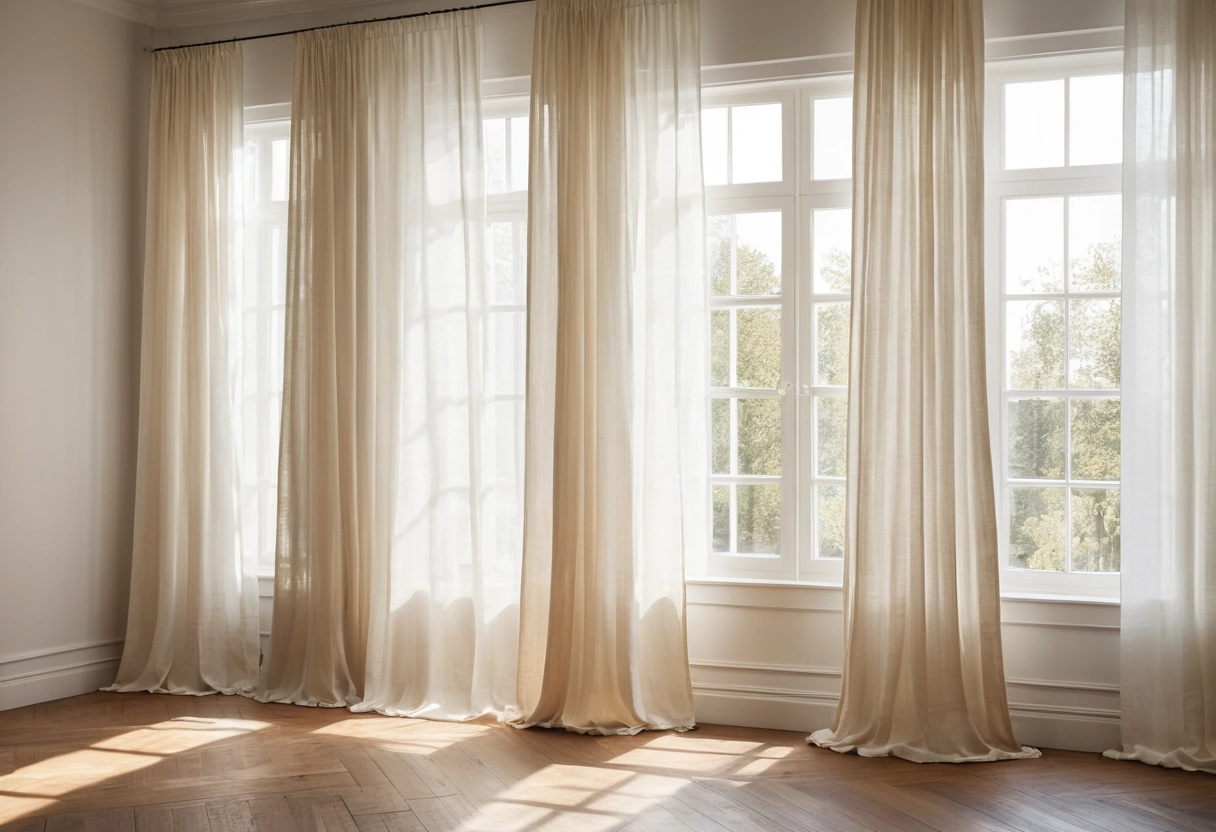
The numbers that make ready-made panels look custom: mount the rod 4 to 6 inches above the window frame, or halfway between frame and ceiling; run it 6 to 12 inches past the frame on each side; buy total panel width of 2 to 2.5 times the span it covers; and hem so panels float a half inch off the floor or just kiss it. Everything after that is fabric and lining.
Hang the rod high and wide
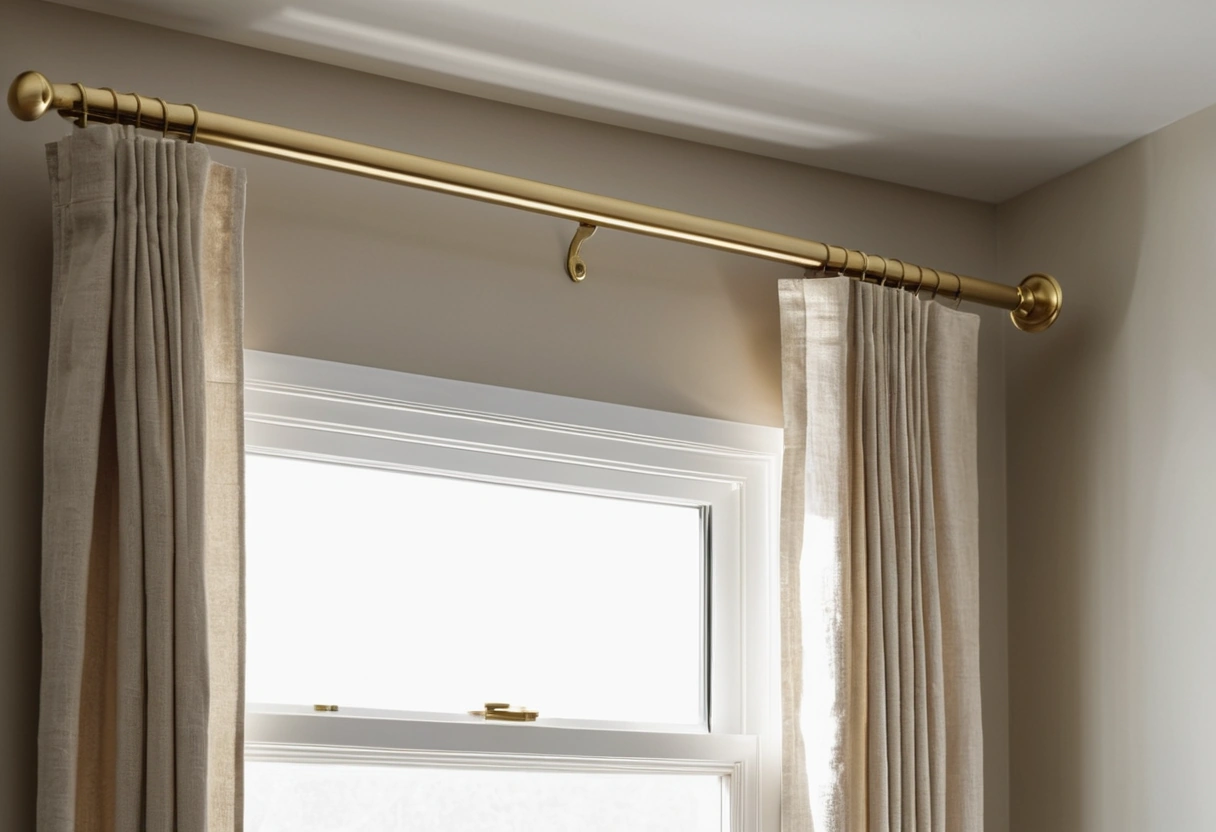
Rod placement does more for the room than the fabric will. Mount it at least 4 to 6 inches above the top of the frame; with 8 or 9 foot ceilings, the stronger move is halfway between frame and ceiling, or ceiling-mounted outright over a low window. Every added inch stretches the window visually, which is why tall curtains rank high among the tactics that genuinely make a small room look bigger.
Then go wide: extend the rod 6 to 12 inches past the frame on each side. Open panels need roughly 10 to 15 inches of stacking room per side, and pushing that stack onto the wall instead of the glass keeps the full window clear in daylight. Finials want another 2 to 3 inches of wall beyond the bracket, worth checking in a tight corner.
Panel width: the fullness multiplier
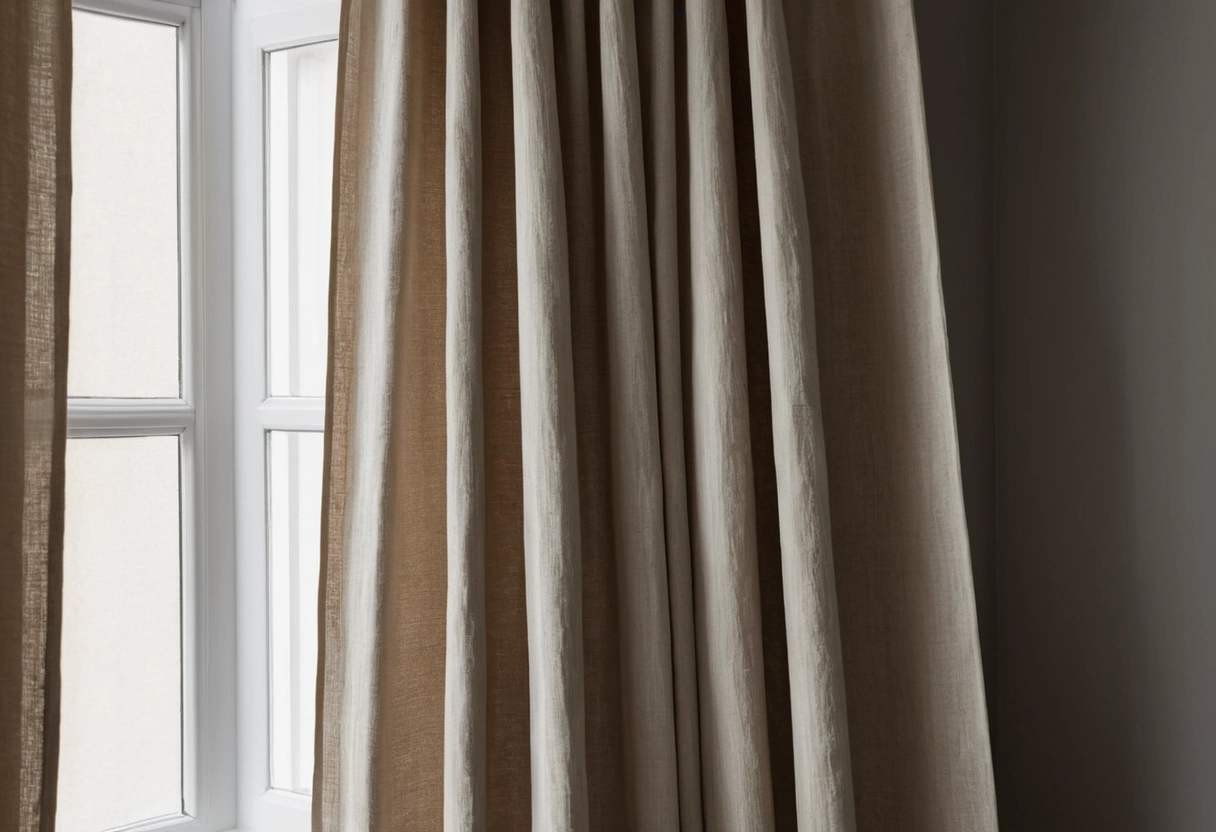
Total fabric width should run 2 to 2.5 times the span it covers. Two times is the standard for mid-weight fabrics, 2.5 to 3 times suits sheers, and 1.5 times is the floor for heavy fabrics in a spare, tailored scheme. Count every panel on the rod toward the total. A 48 inch window with rod extensions covers roughly a 70 inch span, so it wants 140 to 175 inches of fabric; at the common 50 to 54 inch ready-made width, that’s three panels, not two. One skimpy panel per side, stretched flat at dusk, is the loudest ready-made tell there is.
The header changes the math a little: pleated panels arrive with fullness sewn in, while grommet and rod-pocket panels rely on you to supply it through quantity. And a curtain doing wall duty instead of window duty needs less; 1.5 times fullness reads generous when you’re zoning a studio with curtains rather than dressing glass.
Float, kiss, break, or puddle
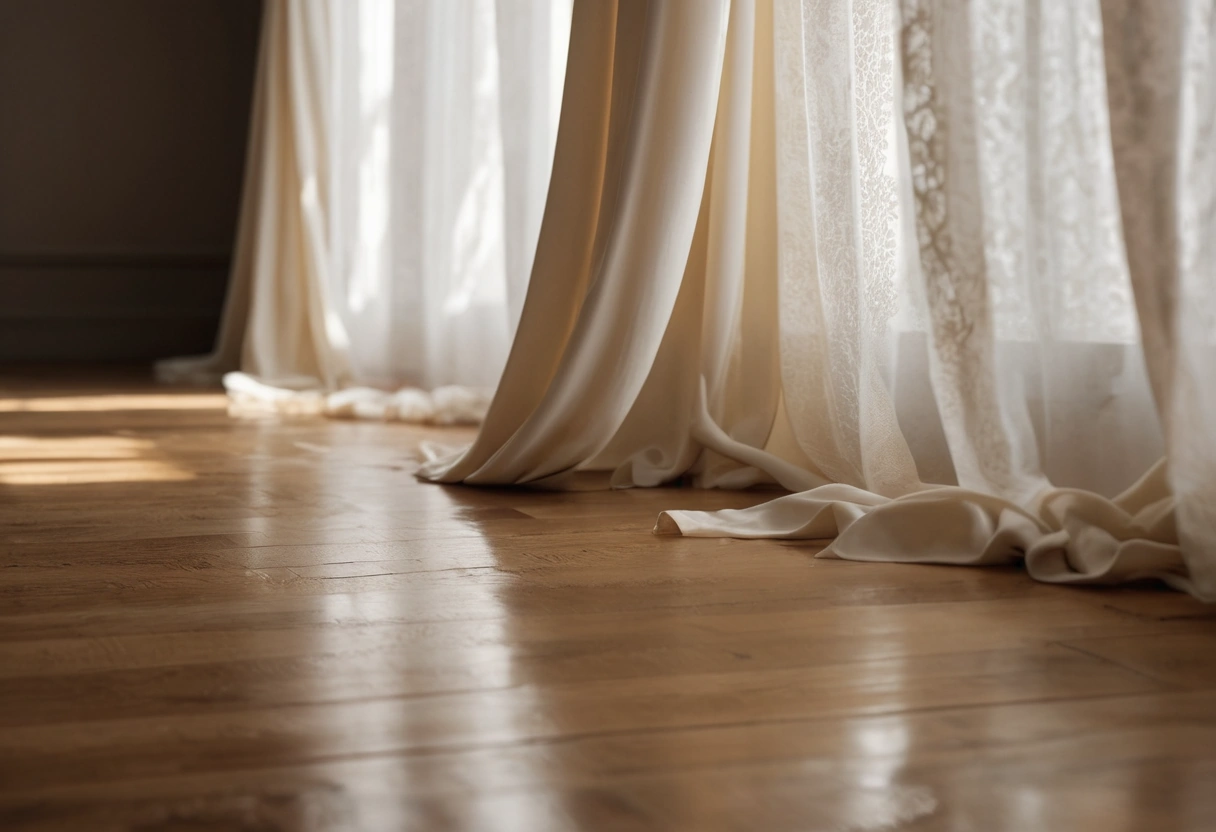
Measure from the floor up to the bottom of the rod’s rings, or to the top of the rod for rod-pocket panels, and do it in three spots along the window, because floors are not level. Then pick a hem:
- Float: the hem ends 1/2 inch above the floor. The default; clean lines, easy vacuuming, panels that draw daily without dragging.
- Kiss: the hem just grazes the floor. The most custom-looking length and the least forgiving; it needs that three-spot measurement taken after the rod is up.
- Break: 1 to 2 extra inches, so the panel breaks like trouser fabric on a shoe. Forgiving of uneven floors, softly tailored.
- Puddle: 4 to 6 extra inches pooling on the floor. Romantic in a formal room with panels that never move; a dust and pet-hair collector everywhere else.
The one length to avoid is the accidental high-water: a hem hovering 3 or more inches off the floor reads as outgrown. Sill lengths still earn their keep over kitchen counters and radiators; end them 1/2 inch above the sill, or at the apron just below it.
Ready-made lengths and when to hem
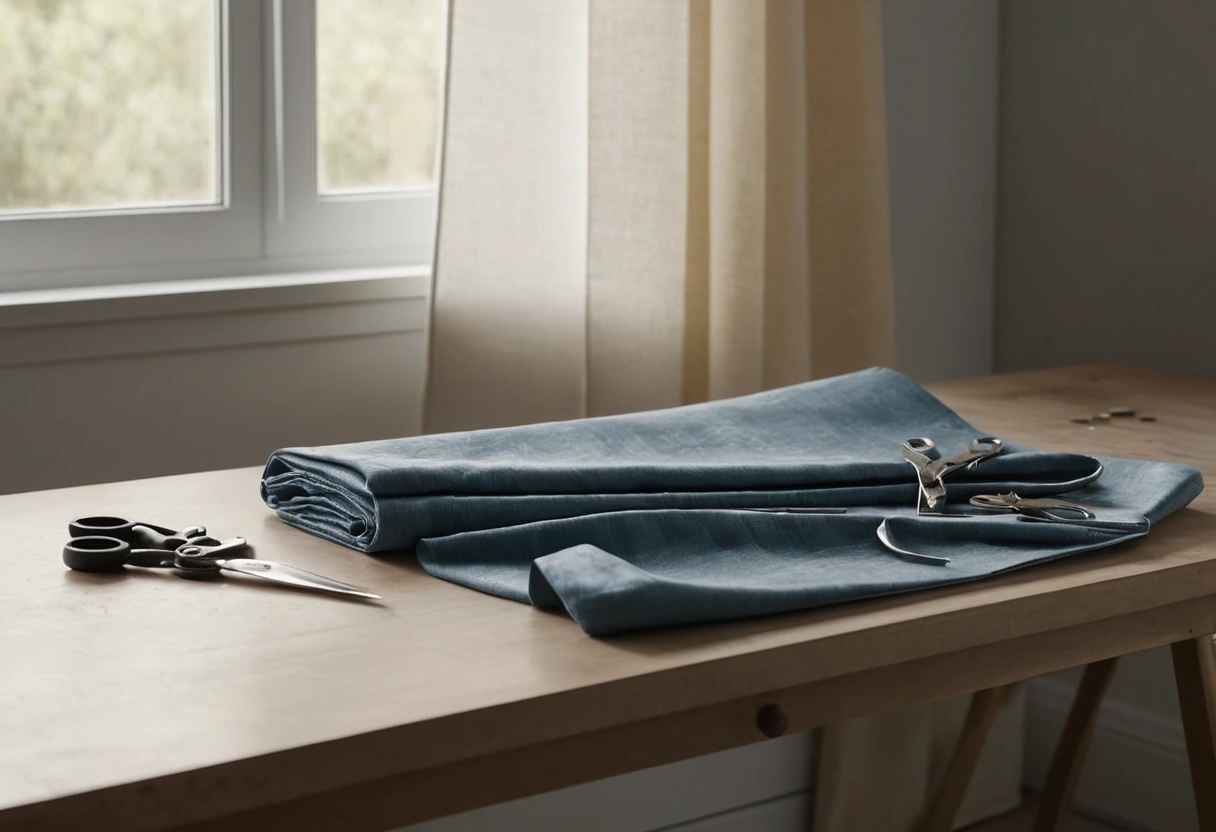
Stock panels come 63, 84, 95 or 96, 108, and 120 inches long. Once the rod goes where it should, 84 inch panels end up high-water in almost every room, so treat 96s as the default with 8 foot ceilings, 108s with 9 footers, and 120s beyond that. Buying long and hemming beats buying short every time.
The tailoring convention is a 4 inch double-fold hem at the bottom; iron-in hemming tape does a passable no-sew version of the same thing. Hem linen and other loose natural weaves only after they’ve hung for two or three days, since they can relax as much as an inch.
Fabric weight and lining types
Sheers filter daylight and give almost no nighttime privacy. Mid-weight cotton and linen are the everyday choices, crisp and casual, often washable. Velvet and wool hang heaviest, insulate best, and drape the deepest folds.
Lining is the upgrade lever. Standard cotton lining adds body, evens out the light, and shields the face fabric from sun. Blackout lining belongs in bedrooms; pair it with a proper bedside reading light, because the room now goes truly dark. Interlining, a flannel layer sewn between face and lining, is the workroom trick that makes a modest fabric hang like an expensive one. Abrasion ratings are irrelevant for drapery, but fading isn’t: on hot southern exposures, the solution-dyed fibers from performance lines hold color where conventional dyes wash out.
The measure-and-buy checklist
- Rod: 4 to 6 inches above the frame or halfway to the ceiling; 6 to 12 inches past each side.
- Width: 2 to 2.5 times the span, counting all panels.
- Length: float 1/2 inch, kiss exactly, break plus 1 to 2 inches, puddle plus 4 to 6.
- Measure floor-to-rings in three spots, after the rod is mounted.
- Bedrooms get blackout lining; sunny south windows get lining or solution-dyed fabric.
- Default buys: 96s for 8 foot ceilings, 108s for 9. Hem, don’t hover.