How to Make a Small Room Look Bigger: What Really Works
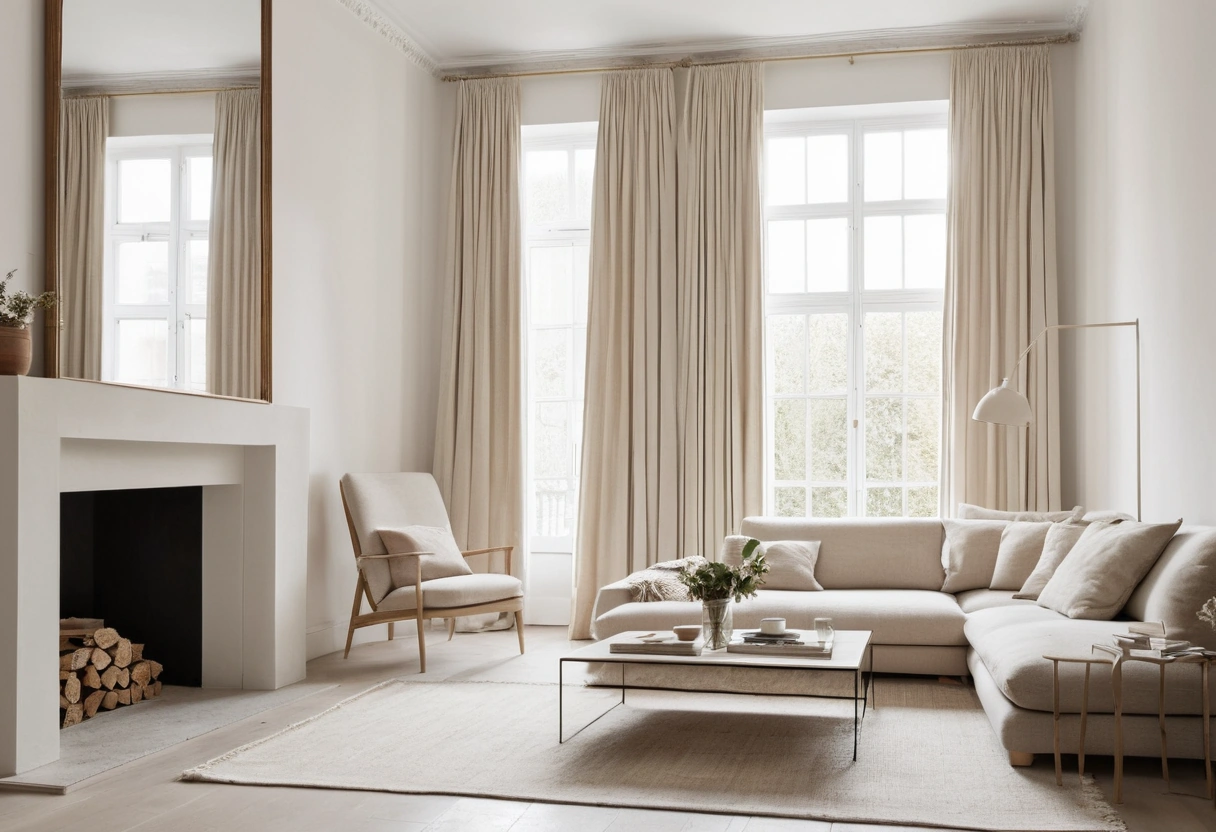
Most of what makes a small room look bigger is scale and sightline work, not paint. The moves that pay: curtain rods hung 4 to 6 inches above the frame or higher, one large mirror placed to catch a window, furniture on visible legs with backs at 32 inches or lower, one big rug instead of two small ones, and light from three heights. Paint helps less than promised.
Sightlines: give the eye a long run
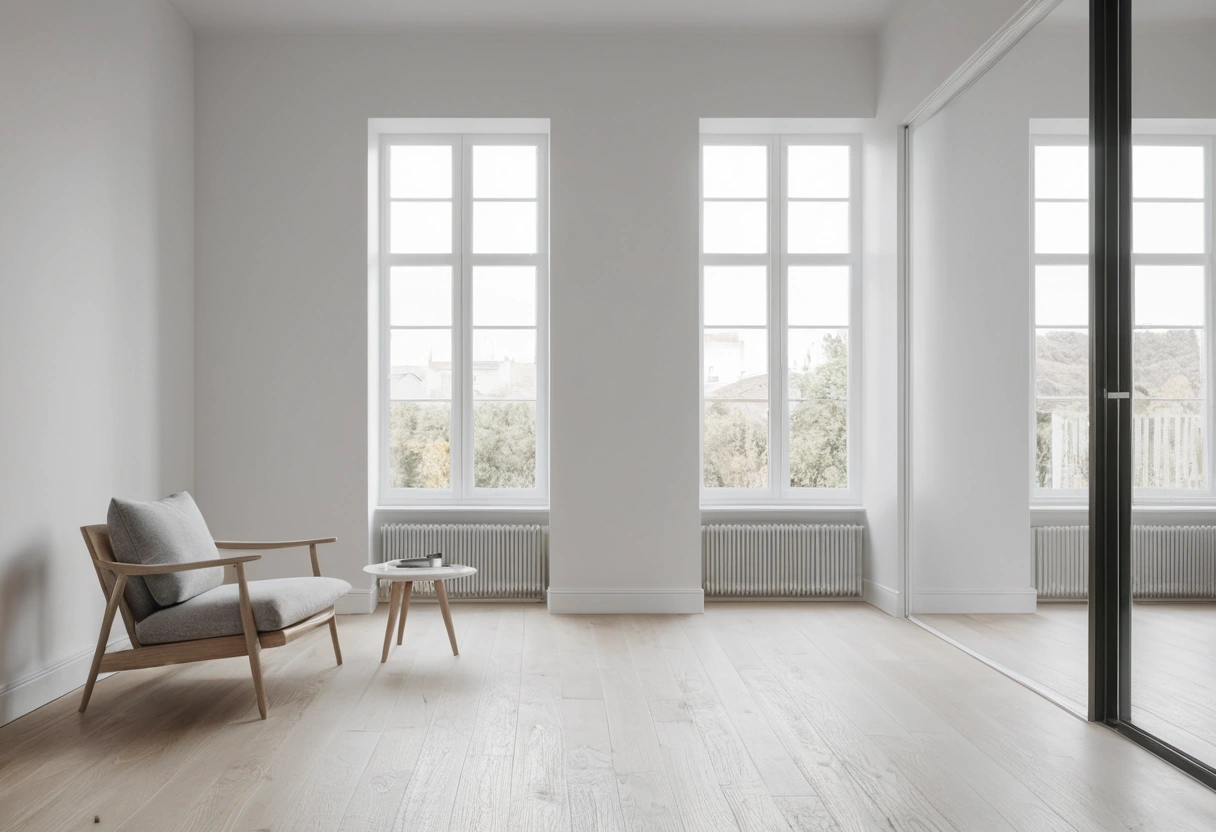
A room reads as big as its longest unbroken line. Protect two of them: the diagonal from the doorway to the far corner, and the floor line along the main wall.
Furniture either serves those lines or breaks them. Pieces on 6-to-7-inch legs keep the floor plane running underneath; skirted and boxy pieces chop it. Backs at 30 to 32 inches let the eye pass over; a 40-inch wingback in the middle of the room is a wall with upholstery. And fewer, larger pieces beat many small ones: three right-sized items read calmer than six little ones doing the same jobs. The specific dimensions that qualify as right-sized are in our small living room furniture guide.
Hang curtains high, wide, and long
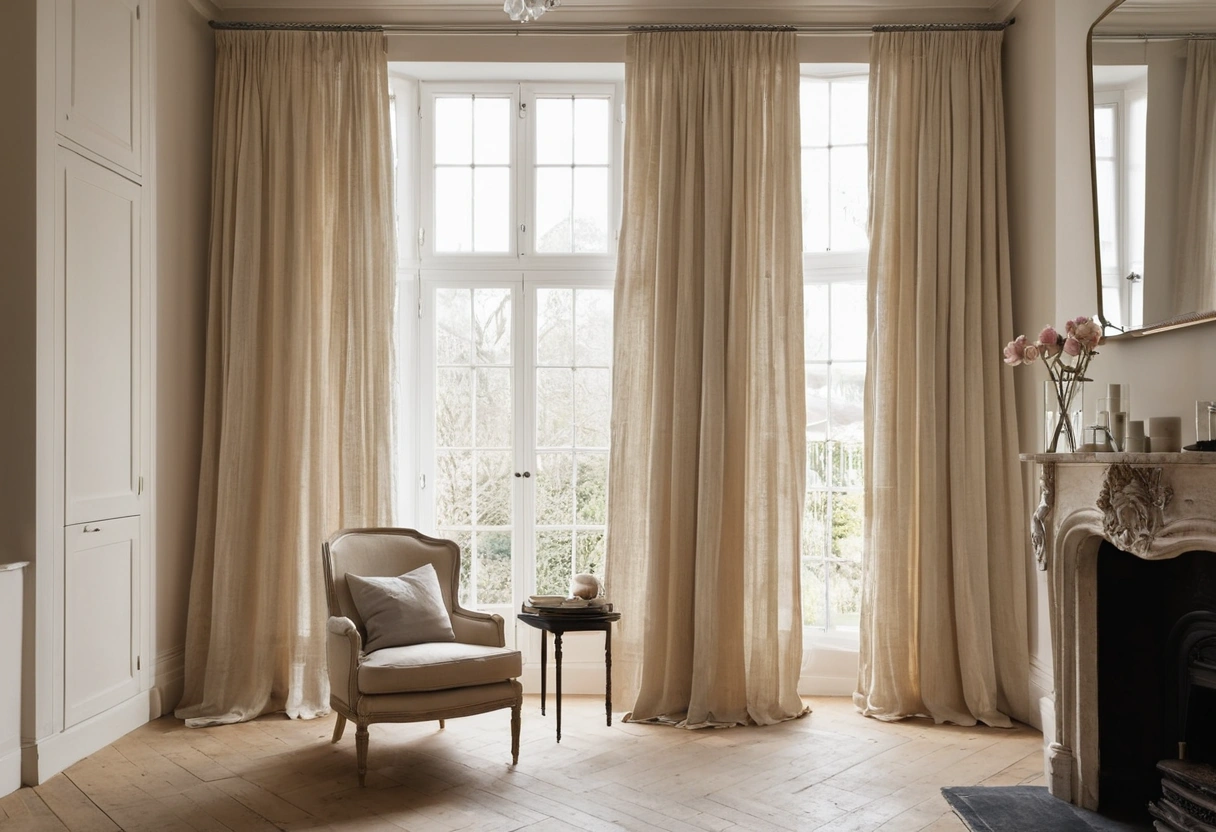
This is the highest-return move in the room. Mount the rod halfway between the frame and the ceiling, never lower than 4 to 6 inches above the frame, and run it 8 to 12 inches past the frame on each side. Panels hang to the floor, just kissing it.
The geometry does the work: the window reads taller because the drapery column is taller, and the glass stays fully exposed because the open panels stack on wall instead of window. From across the room, the eye buys the implied window, not the real one. Fabric choice and exact measurements, including fullness multipliers and hem lengths, are covered in curtain length and fabric.
Pick panel color close to the wall color. Low contrast lets the whole wall read as one tall plane; a dark panel on a light wall chops the wall into strips and gives back half the gain.
Mirrors: one big one, placed to catch light
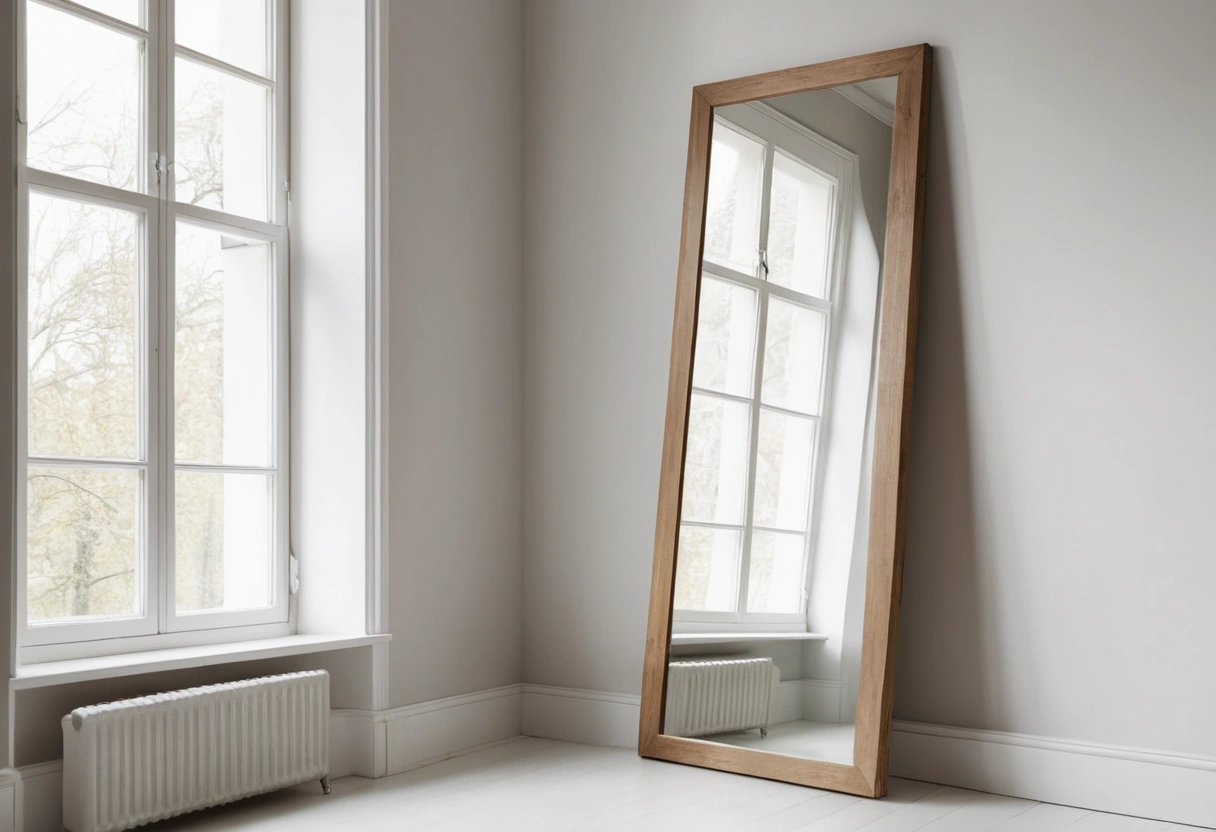
One large mirror outperforms a wall of small ones. The working size is about two-thirds the width of the furniture it hangs over, or a leaning floor mirror 60 to 70 inches tall. Placement decides the payoff: on the wall adjacent to or across from a window, the mirror doubles daylight and adds a second “view.” Facing a blank wall, it doubles a blank wall.
Two placements to skip: directly facing the door, where the reflected motion reads as another person entering, and behind a TV or a busy shelf, where it doubles visual noise instead of light.
Hang it at standing eye height, center around 57 to 62 inches from the floor, so the reflection delivers usable view rather than ceiling. In a dining nook or a hallway, a mirror mounted to reflect the nearest window is the closest thing to adding a window for under a hundred dollars.
Color and light, honestly weighted
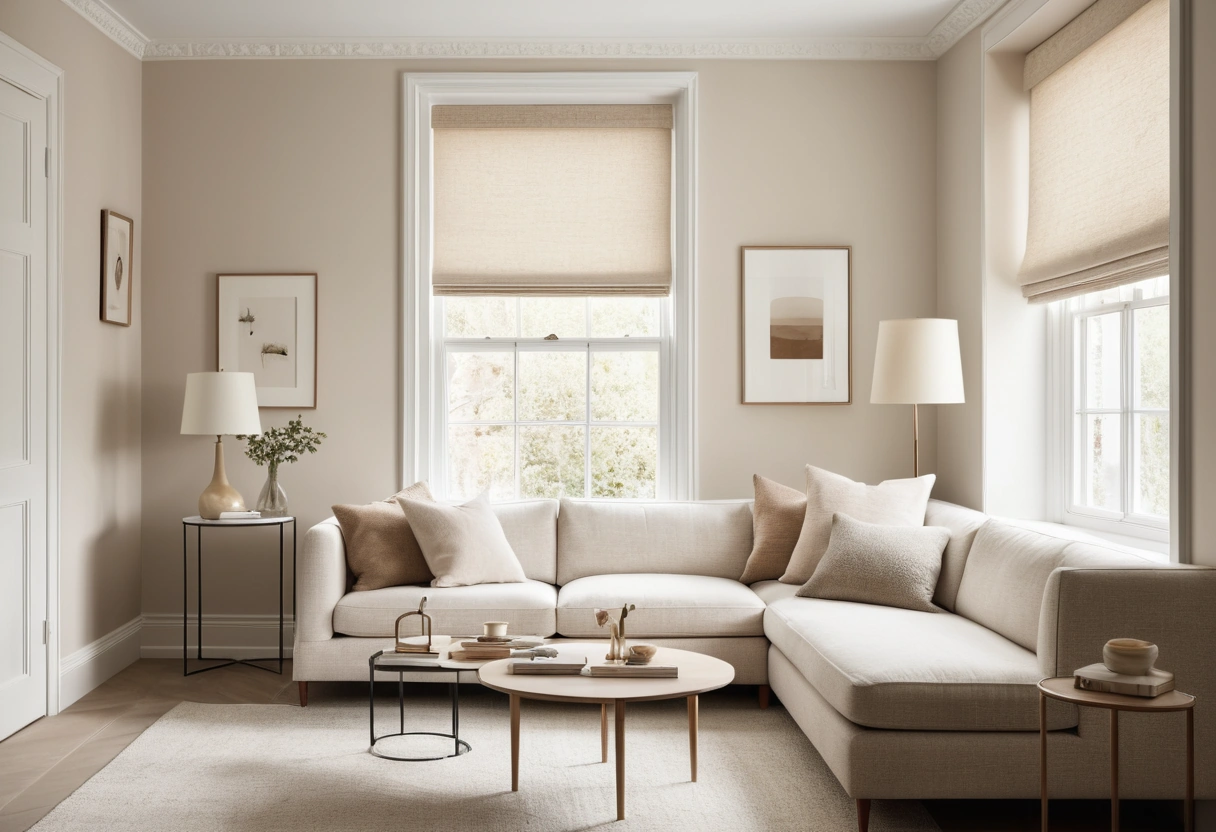
Light paint helps, but less than the repainting industry implies. High-reflectance walls (an LRV of 60 or higher) soften shadows in the corners, and painting trim and walls one color removes the contrast lines that shrink a wall. Ceiling a half-shade lighter than the walls adds a little height. All real, all modest.
The honest caveat: a small room painted dark, on purpose and with enough light, can look richer and no smaller. That case is argued in dark paint in small rooms.
Light does more than pigment. One ceiling fixture flattens a room into a bright center and dim edges, and dim edges read as closer walls. Three sources at three heights, a ceiling fixture, a floor or table lamp, and something low or wall-mounted, push the perceived boundaries out. The full recipe is in our guide to layered lighting, and it moves the needle more than any paint decision.
Tactics that fail
- Buying tiny furniture. A crowd of small pieces makes a room read busy and doll-sized. Scale down dimensions, not presence.
- The postage-stamp rug. A rug floating free of the furniture shrinks the whole group; get at least front legs on, per the standard rug size rules.
- Gloss and mirror on every surface. Past one large mirror, reflections add glare and clutter, not depth.
- Shoving everything against the walls. An inch or two of float around furniture reads as ease; a perimeter lineup reads as a waiting room.
- Angling furniture across corners. The diagonal placement strands unusable triangles of floor behind every piece, and small rooms have no floor to strand.
- Painting it all white and stopping. White walls with one dim ceiling light still read small, just colder.
The working checklist
- Clear the doorway diagonal and the main floor line; nothing tall crosses either.
- Rod height: frame-to-ceiling midpoint; width: 8 to 12 inches past the frame each side.
- One mirror, two-thirds furniture width or 60-plus inches leaning, aimed at a window.
- Legs and low backs on the biggest pieces; skirted boxes only where sightlines don’t care.
- One big rug, front legs on, instead of two small ones.
- Three light sources at three heights before any repainting decision.
- Walls light or deliberately dark, trim matched to wall, ceiling half a shade lighter.
Work the list top to bottom: geometry first, furniture second, light third, paint last. That order matches how much each one actually moves the room.