Layered Lighting: Ambient, Task, and Accent, Explained
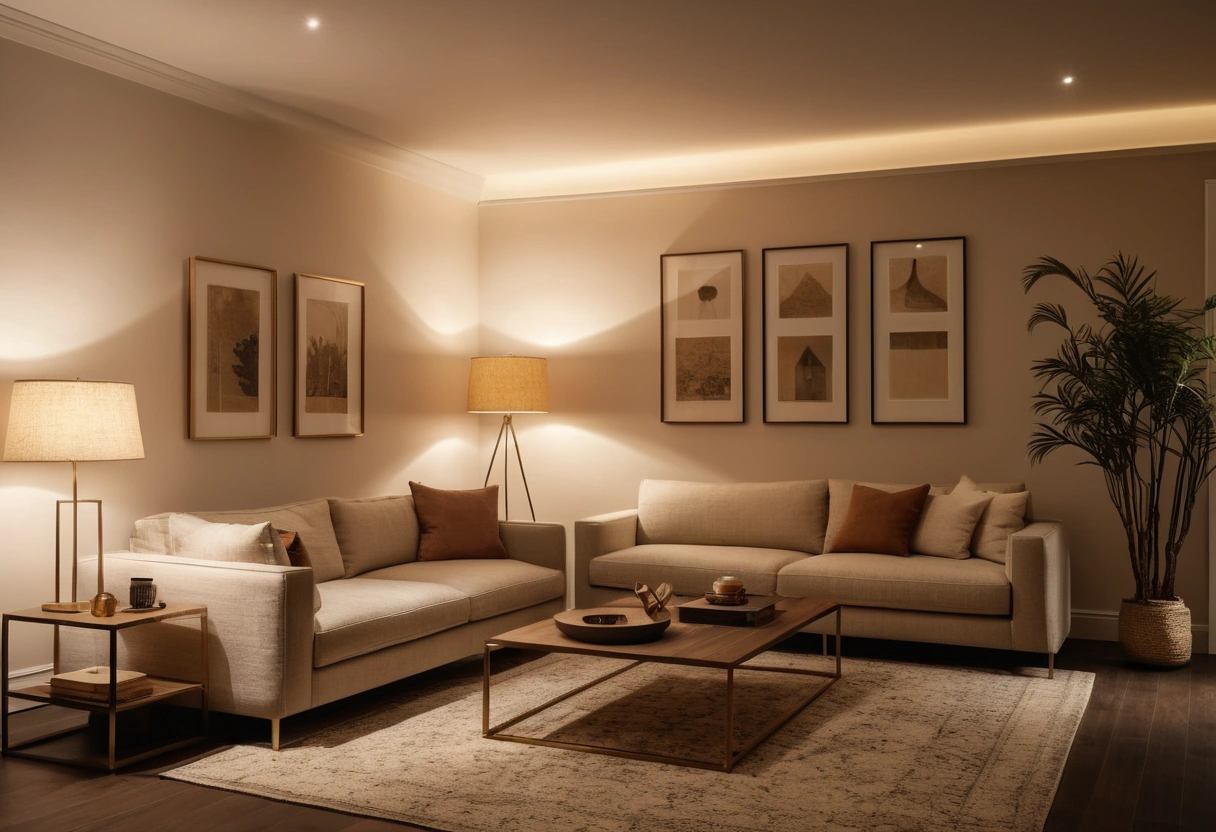
Good rooms run three layers of light. Ambient is the general fill, task is the bright, focused light where you actually do things, and accent is the narrow beam that gives a room depth. Plan the task layer first, size the ambient layer from square footage, then add accent at roughly three times the brightness of the surfaces around it. One ceiling fixture cannot do all three jobs, and a room lit from a single point almost always feels flat.
Why one ceiling fixture fails
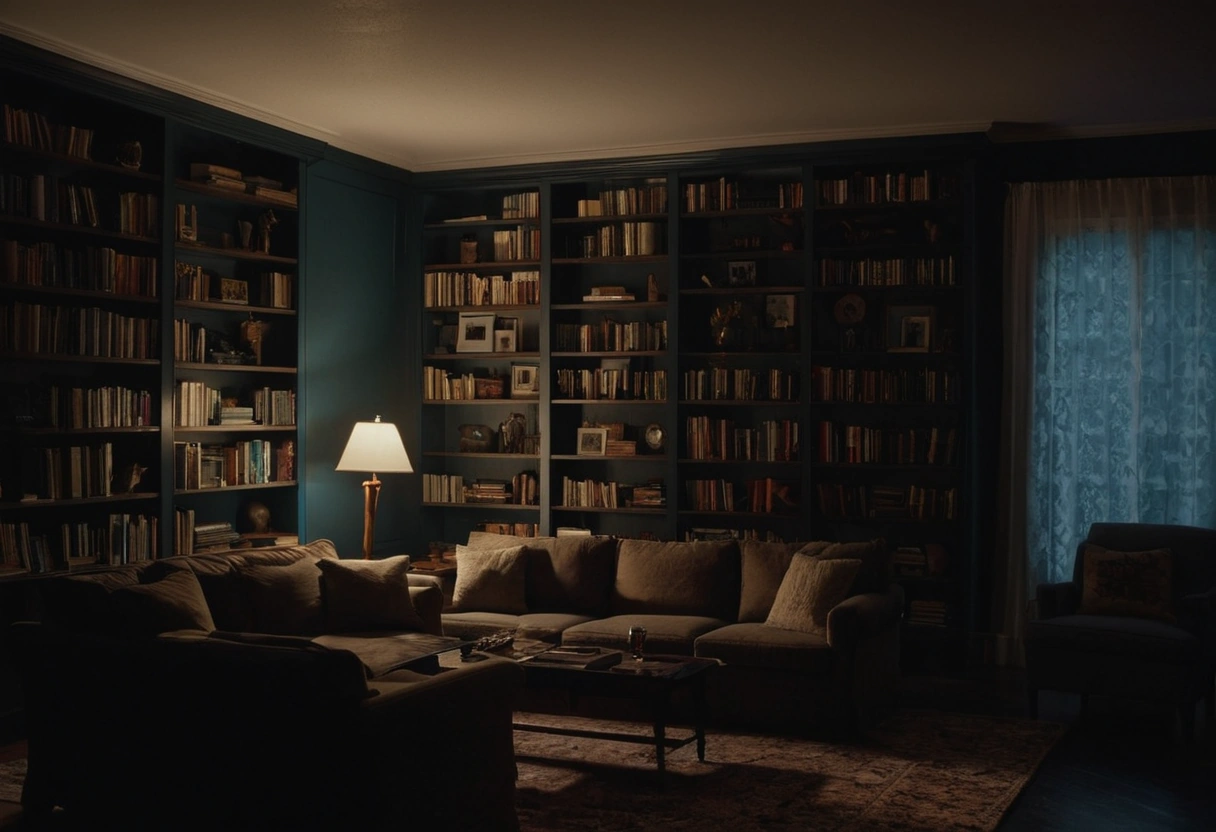
A single overhead source throws light straight down. That puts shadows exactly where you don’t want them: under brows and noses at the mirror, under the upper cabinets on the counter, across the page in your lap. Corners go dim, the fixture itself glares, and everything in between sits at one flat level.
Flatness is the deeper problem. The eye reads comfort from contrast: bright pools where things happen, softer zones between them. Uniform light from one point erases that contrast, which is why a big ceiling light at full blast makes a living room feel like a waiting room, while a small one just leaves it gloomy. A bigger bulb fixes neither. More sources do. The long-standing designer rule of thumb: a room needs at least three points of light, and living rooms usually carry five or more.
Builder-grade houses ship with one ceiling box per room, which is why so many rooms feel off until the lamps arrive. The fix costs less than it sounds: two lamps and a plug-in picture light can layer a room without an electrician.
The three layers, defined
| Layer | Job | Typical fixtures |
|---|---|---|
| Ambient | General fill so the room reads evenly | Recessed cans, flush mounts, torchieres bounced off the ceiling |
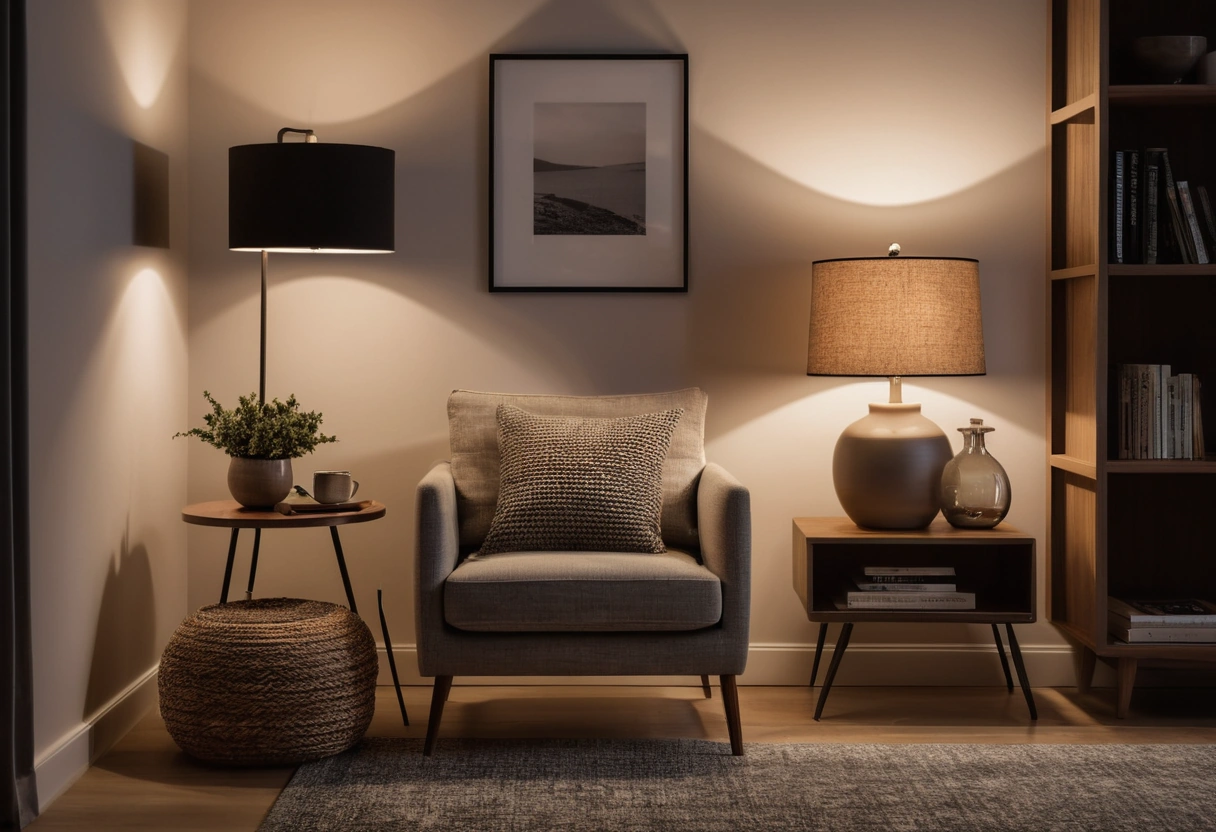
| Task | Focused light for one activity | Reading lamps, under-cabinet strips, vanity sconces, island pendants |
| Accent | Depth and emphasis on objects | Picture lights, aimable cans, shelf and niche strips |
The layers differ in beam and position more than in hardware. Ambient is broad and comes from high up. Task is tight, close to the work, and placed so your own body doesn’t shadow it. Accent is narrow and aimed. The working convention for accent: about three times the brightness of the surrounding ambient level on the object it hits. Below that it disappears; far above it, the room starts to read like a gallery.
What the layers look like, room by room
Living room: ambient from cans or a torchiere, task from a lamp beside every seat where someone reads, accent from a picture light or a can washing the fireplace wall.
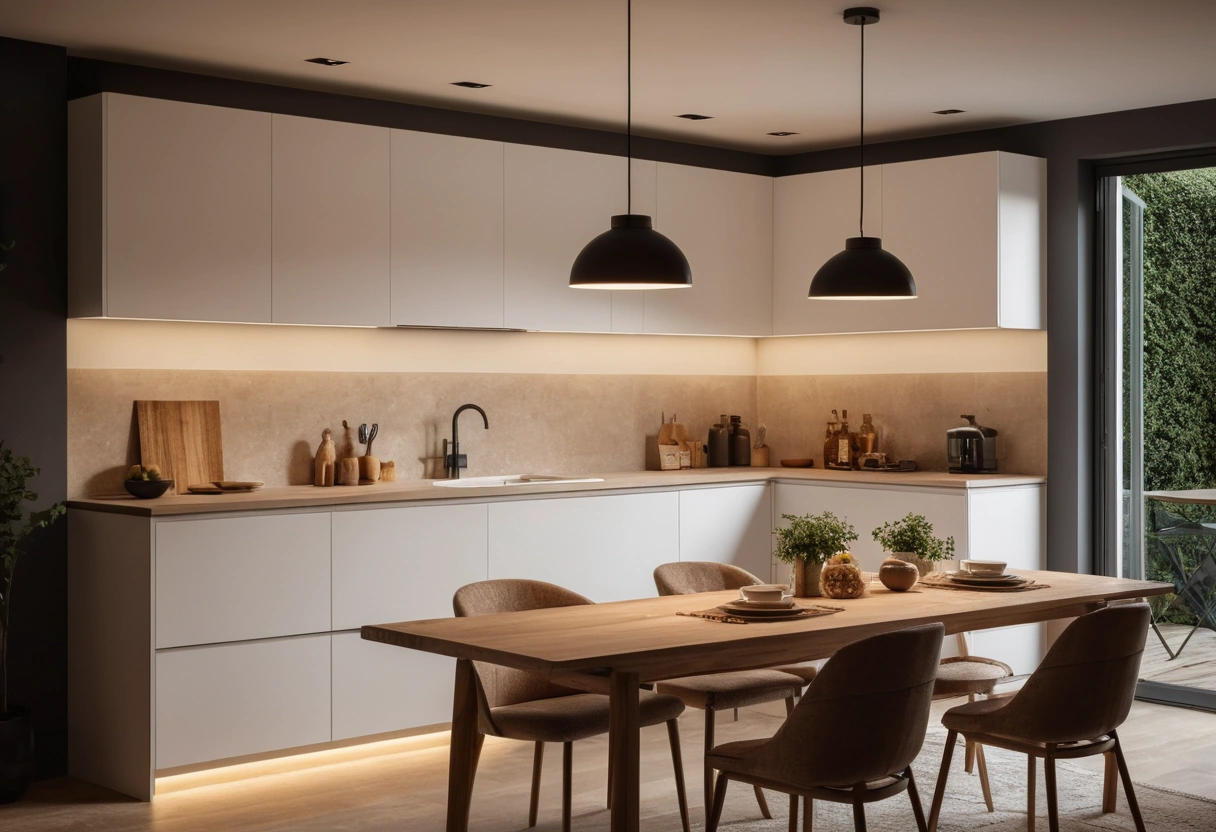
Kitchen: ambient cans across the footprint, task from under-cabinet strips and island pendants, accent inside glass-front cabinets or along the toe-kick. The can layout math is in our guide to recessed can spacing.
Dining room: the fixture over the table does double duty as ambient and task, a pair of sconces or a sideboard lamp fills the walls, and a dimmer does the rest.
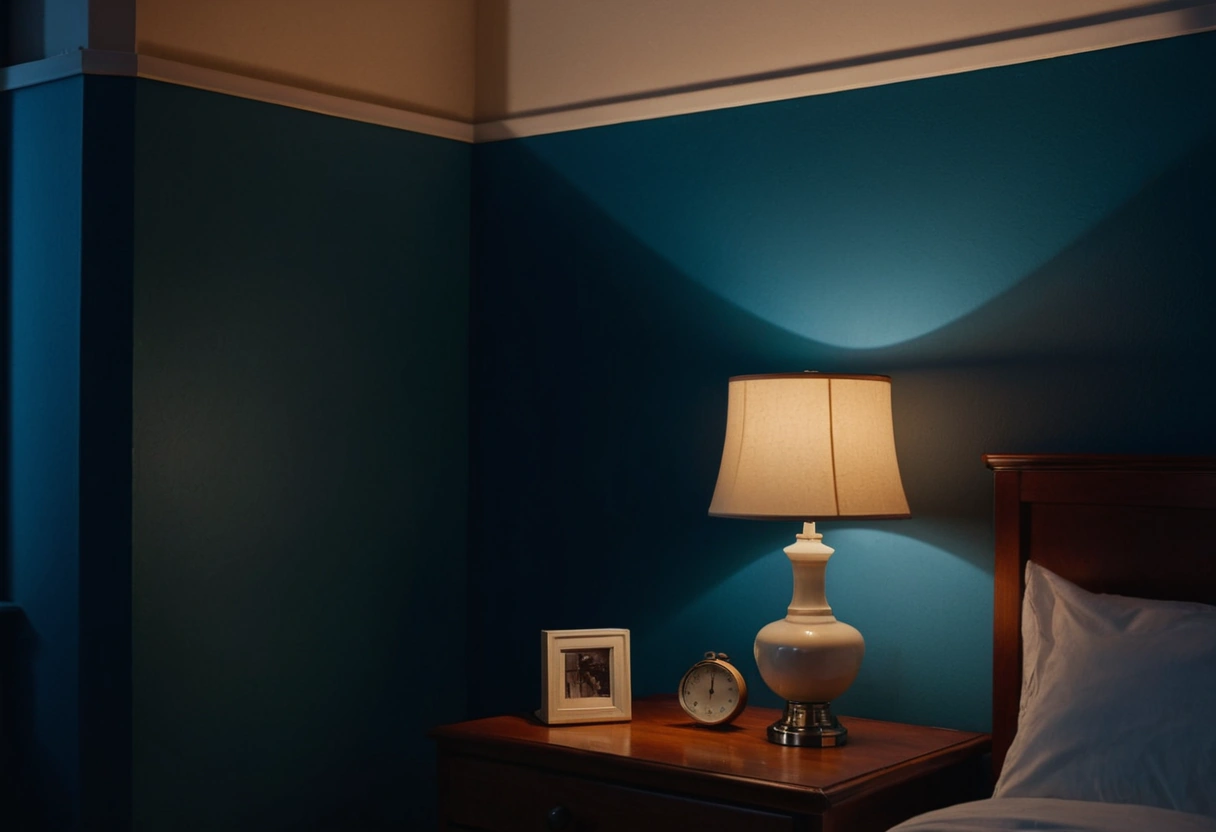
Bedroom: an ambient ceiling fixture on a dimmer, task light at the bed, and a small lamp on the dresser as accent. Mounting numbers are in bedside lamp and sconce heights.
Bathroom: task leads here, at the mirror and at face height; see vanity light placement. Ambient is a ceiling fixture or a pair of cans, and a lit shower niche covers accent.
Home office: the task layer is a desk lamp placed to avoid monitor glare, which depends as much on desk and monitor position as on the lamp itself.
Design the layers in this order
Task first. List what actually happens in the room: reading, chopping, shaving, homework, video calls. Give each activity its own fixture, bright enough for the job and placed between you and the work, not behind you.
Ambient second. Size it from the room’s square footage using the lumen targets per room, then subtract what the task fixtures already contribute. This is why task-first matters: rooms designed ambient-first end up over-lit at the ceiling and dark where the work happens.
Accent last, and sparingly. Pick two or three things worth pointing at: a painting, a textured wall, open shelving. Accent everything and you have accented nothing. It also runs on the smallest hardware of the three layers; a 5 watt picture light or a short LED strip is usually plenty.
Switching and dimmer planning
Layers only pay off if you can run them separately. The wiring plan matters as much as the fixtures.
- One switch per layer, minimum. Cans, pendants, and toe-kick strips ganged on a single switch defeat the whole idea.
- Dimmers on ambient and accent, always. Full output is for cleaning; evenings run at 30 to 50 percent.
- Three-way switches at every entry to the room, plus bedside control in bedrooms.
- Lamps are a layer too. Put them on switched outlets or smart plugs; nobody walks a room turning on five lamps twice a day.
- Renters can retrofit all of this with smart bulbs and plug-in dimmers. A scene that sets all three layers at once gets used far more than five separate switches ever will.
- Keep every bulb in the room in one color family, or the layers will fight; the rules are in matching color temperature.
The layered-room checklist
- Every reading seat has a task lamp within reach.
- Counters, desks, and mirrors are lit at the work, not from the room’s center.
- Ambient hits the room’s lumen target after task fixtures are counted.
- Two or three accents, no more, at about three times ambient brightness.
- Each layer switches separately; ambient and accent dim.
- One color temperature family across the room.
- At least three light sources in every room you use after dark.
Count the sources in your least comfortable room tonight. If the answer is one, you have both the diagnosis and the fix.