Bathroom Vanity Lighting: Placement That Flatters Faces
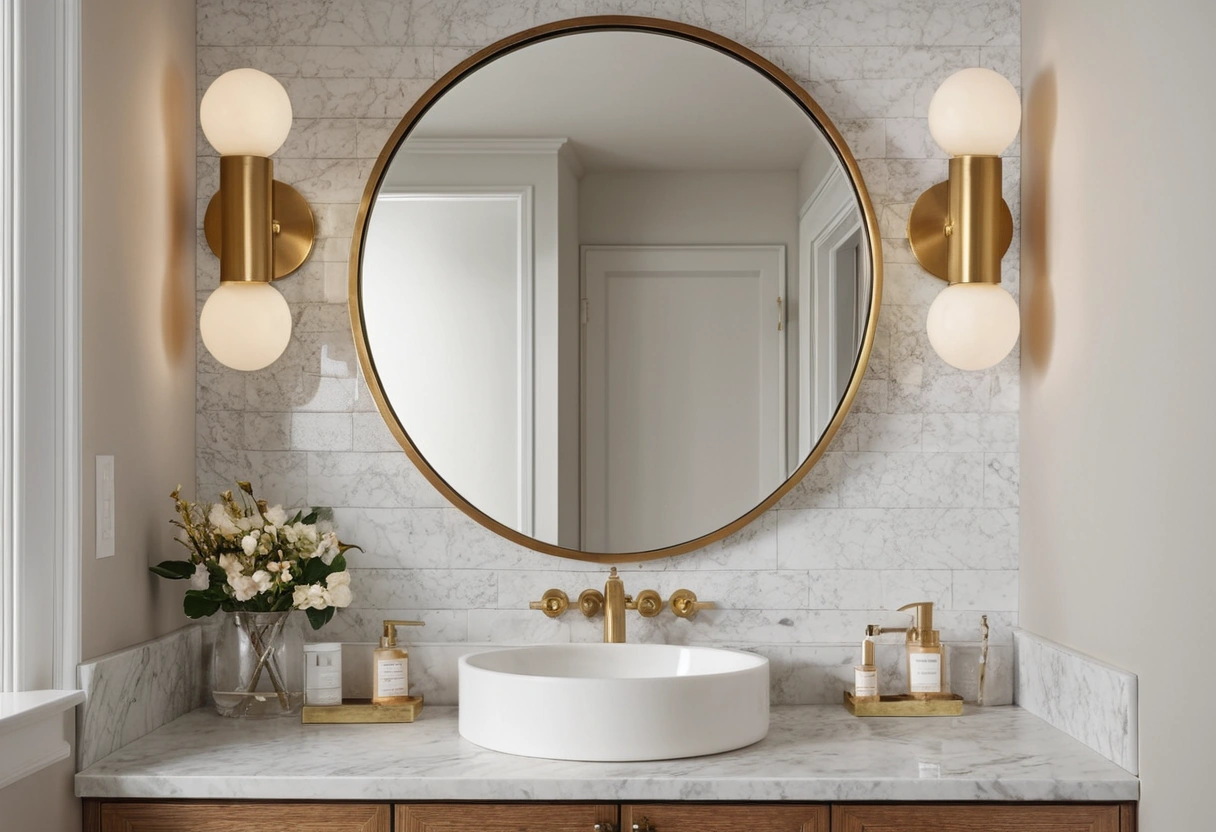
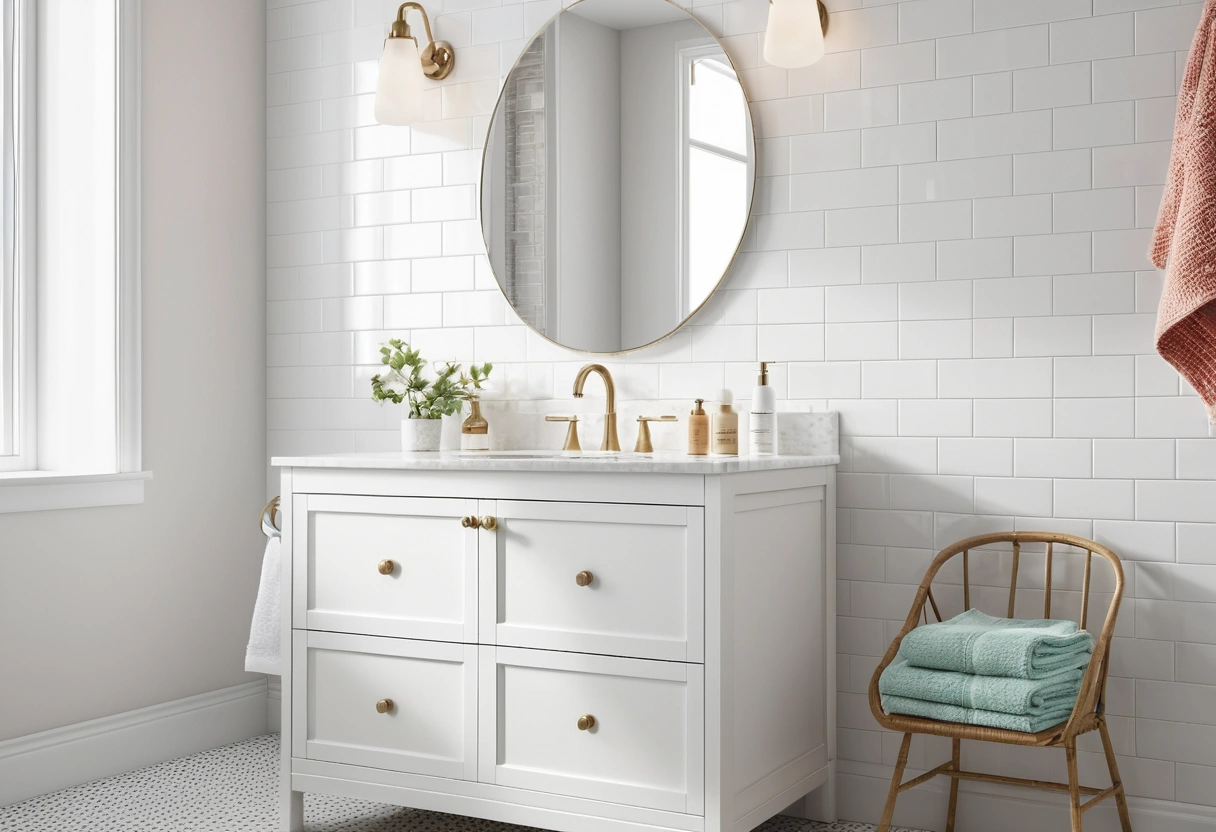
Light a face from the sides, not from above. The convention: sconces flanking the mirror, centers 60 to 66 inches off the floor, spaced 36 to 40 inches apart. Where sconces won’t fit, use a bar light above the mirror, around 75 to 80 inches off the floor. Aim for 1,400 to 1,800 lumens total at the vanity, CRI 90 or better, at 2700K to 3000K.
Why side light flatters and overhead doesn’t
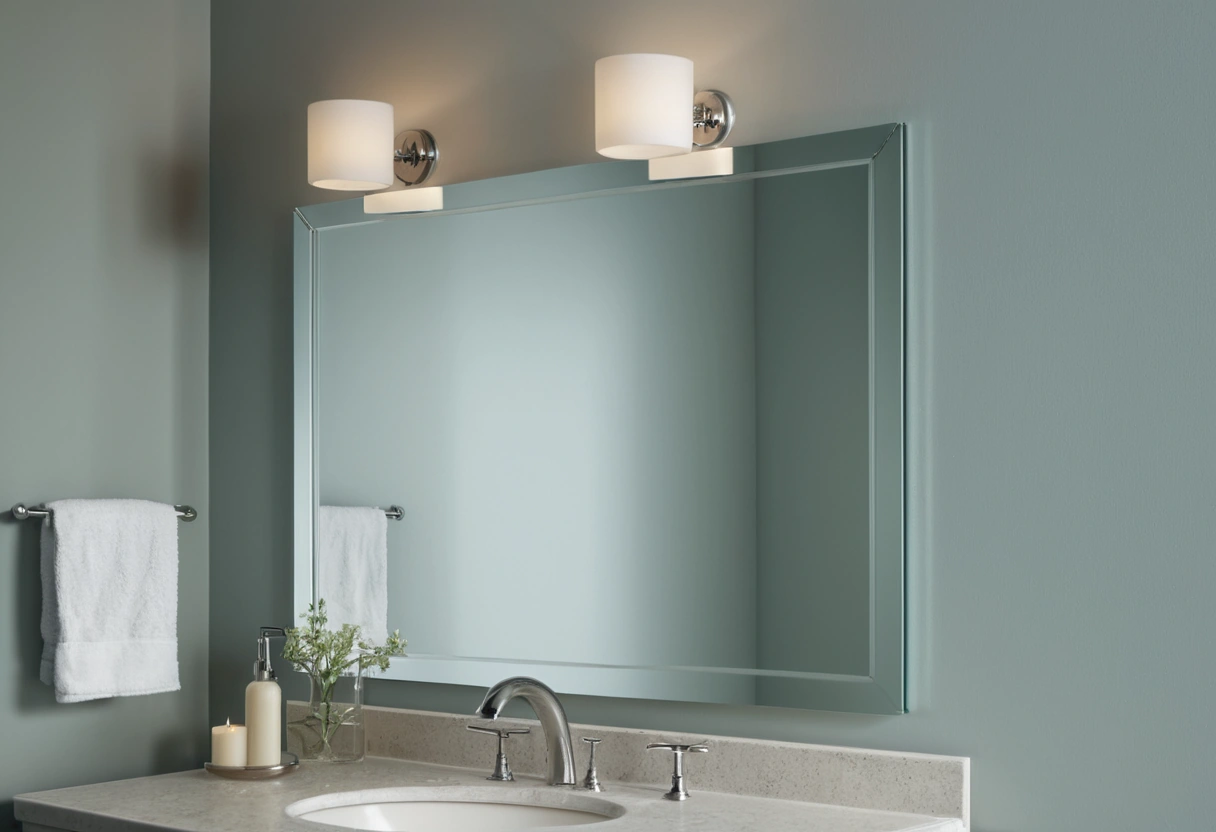
An overhead-only bathroom light works like noon sun: the brow shadows the eyes, the nose shadows the lip, the chin blacks out the neck. Every grooming task gets harder, and every face looks tired regardless of how the person slept.
Light arriving horizontally, at face height, from both sides fills those shadows evenly. It’s the same reason theater mirrors ring the face with bulbs. The room’s finishes help or hurt: pale walls and a light counter bounce fill light back up at the chin, while a dark bath eats it, so dark schemes need more output to do the same job.
The ceiling fixture isn’t useless. It’s fine as general fill. It just can’t be the only source at the mirror. The effect is easy to test tonight: hold a flashlight above your head at the mirror, then out beside your cheek, and watch the shadows move.
Sconce placement flanking the mirror
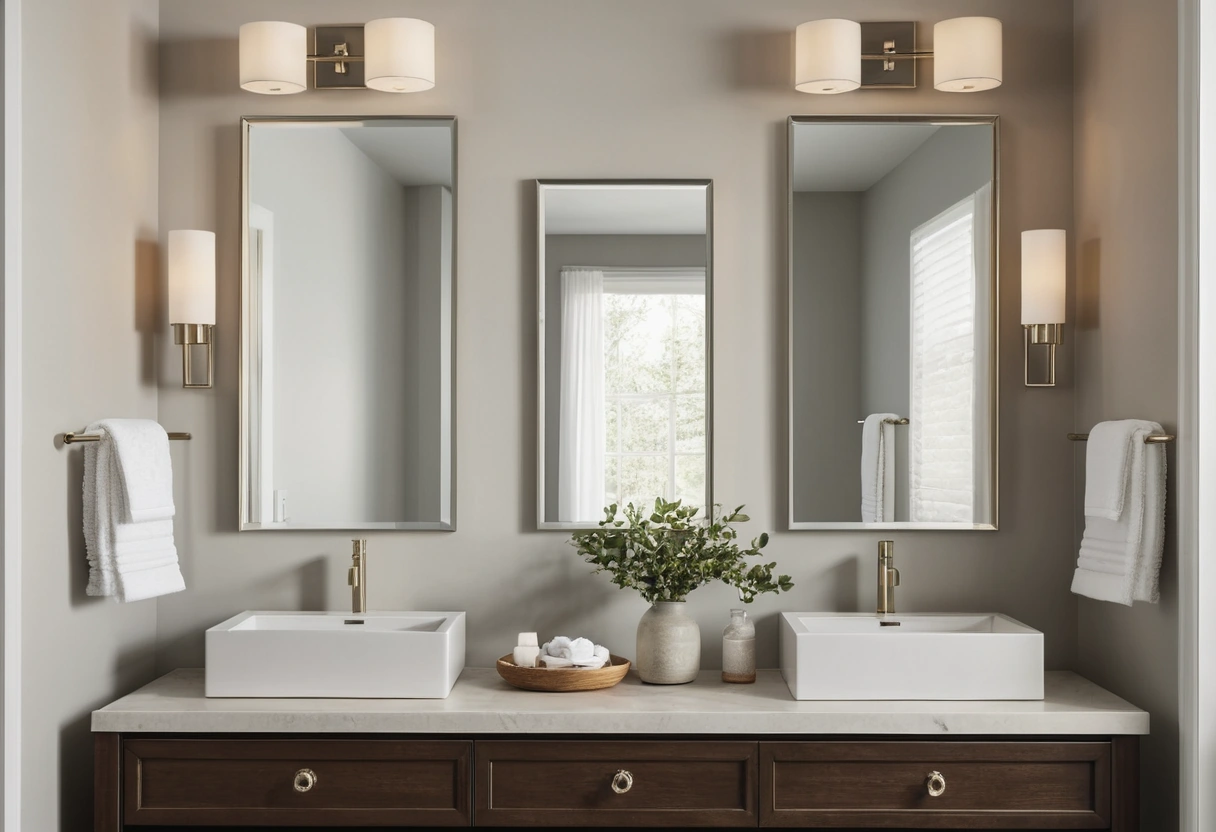
The numbers: sconce centers at 60 to 66 inches off the floor, which puts the source at face height for most adults. In a household with a large height difference, split the difference; vertical bar sconces forgive a few inches in either direction because they spread light along the face’s full height, which makes them the safer pick over small round ones.
Spacing: 36 to 40 inches apart on center, or just outside the mirror’s edges when the mirror is narrower than that. Fixture choice matters as much as position; at eye level, exposed bulbs glare, so pick diffused shades in frosted glass, linen, or opal acrylic.
A double vanity scales the pattern rather than doubling it: a sconce at each end plus one between the two mirrors gives both sinks cross light from three fixtures instead of four, a standard move that saves wall space and a fixture.
Fit check before buying: flanking sconces need about 3 to 4 inches of clear wall on each side of the mirror. If the mirror runs wall to wall, mounting vertical fixtures directly on the glass is a standard detail any glass shop can drill for. Failing that, go to the bar light below.
When a bar light over the mirror is the right call
Wall space runs out fast in small baths, and plenty of layouts simply can’t take side sconces; fitting the rest of the room around the same constraints is covered in small bathroom clearances. A mirrored medicine cabinet with no side wall at all points the same direction: one horizontal fixture above.
Placement: center the fixture over the mirror with its center around 75 to 80 inches off the floor, just above the glass. Length: about three quarters of the mirror’s width, and never wider than the vanity. Pick a bar that pushes light down and out through a diffuser, not a row of bare globes pointed at the ceiling; the light has to reach the face.
A bar alone still leaves faint shadows under brow and chin. A ceiling fixture placed so its light lands in front of your face at the mirror, rather than behind your head, softens the rest.
Lumens, CRI, and color temperature for grooming
The vanity zone wants 1,400 to 1,800 lumens in total. Two sconces at 500 to 700 lumens each plus modest ceiling fill get there. Whole-bathroom budgets run 70 to 80 lumens per square foot, with the math in the room lumen cheat sheet; a windowless bath runs its bulbs all day, which is one more argument for efficient LED at full spec.
Accuracy beats everything here. CRI 90 or better is the difference between makeup that matches daylight and makeup that surprises you in the car, and the ratings are decoded in bulb color temperature. Temperature: 2700K to 3000K, matched to the rooms around the bathroom so the doorway isn’t a color jump. A dimmer earns its cost at 3 a.m.
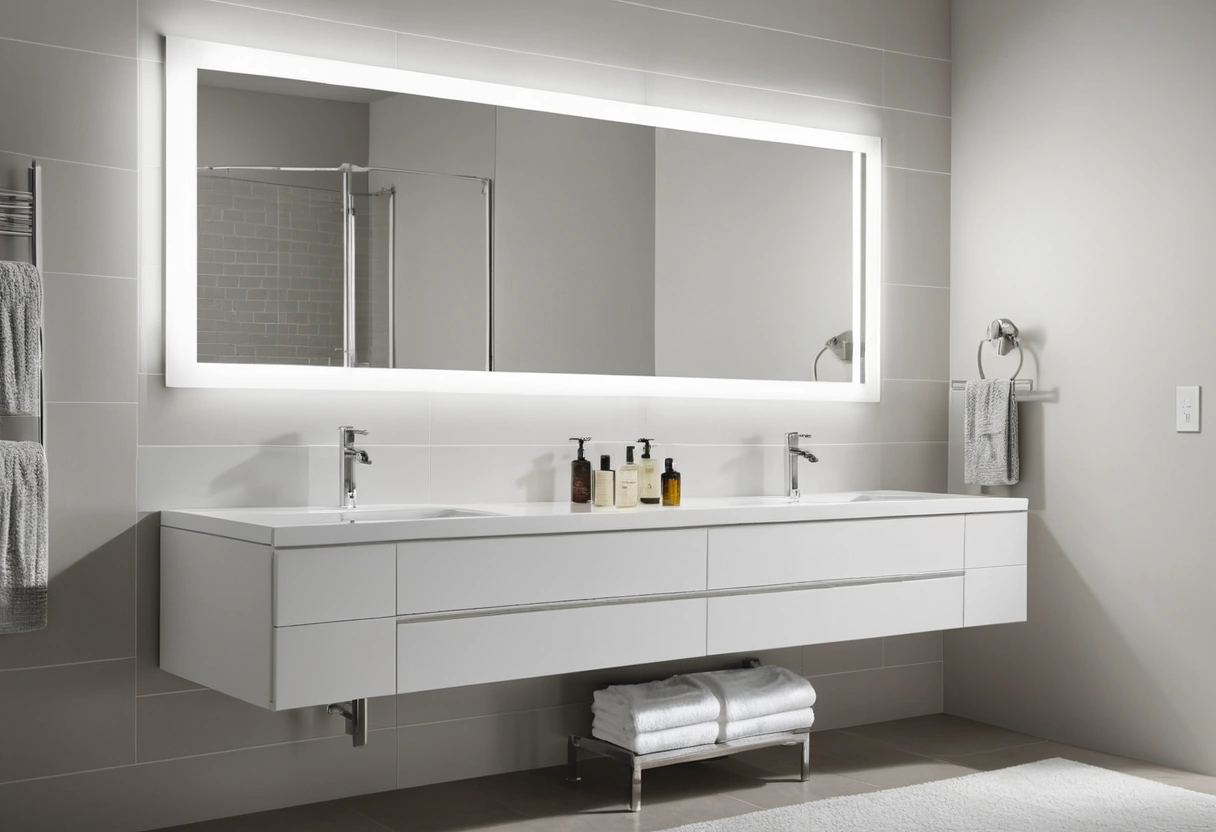
Lighted mirrors with built-in LED rings do the side-light job well and suit tight walls; hold them to the same specs, listed lumens, Kelvin, and CRI, because with those the mirror is the fixture.
The vanity is the bathroom’s task layer. The full plan adds ambient fill and maybe a lit niche, following the structure in layered lighting.
Damp, wet, and which rating goes where
Fixture listings come in three flavors, and bathrooms use two:
- Damp-rated: built for humidity without direct spray. That covers vanity sconces, over-mirror bars, and most bathroom ceiling fixtures.
- Wet-rated: built for direct water contact. Anything inside the shower or over the tub, where a recessed can also needs a covered lens trim; the layout rules for those cans are in recessed lighting spacing.
- Dry-rated fixtures belong in other rooms, full stop.
When in doubt, the wet-rated version costs a little more and removes the question, and a steam shower pushes every fixture inside it to wet-rated by default. Wiring near water is licensed-electrician territory, not a weekend guess.
Vanity lighting checklist
- Sconces flanking the mirror: centers 60 to 66 inches off the floor, 36 to 40 inches apart.
- Diffused shades at eye level; no bare bulbs.
- Fallback: an over-mirror bar around 75 to 80 inches up, three quarters of the mirror’s width.
- 1,400 to 1,800 lumens at the vanity; CRI 90 or better; 2700K to 3000K; on a dimmer.
- Damp-rated at the mirror, wet-rated in the shower and steam zones.
- Ceiling fixture as fill only, never as the lone source.