Bedside Lighting: Lamp Heights and Sconce Placement
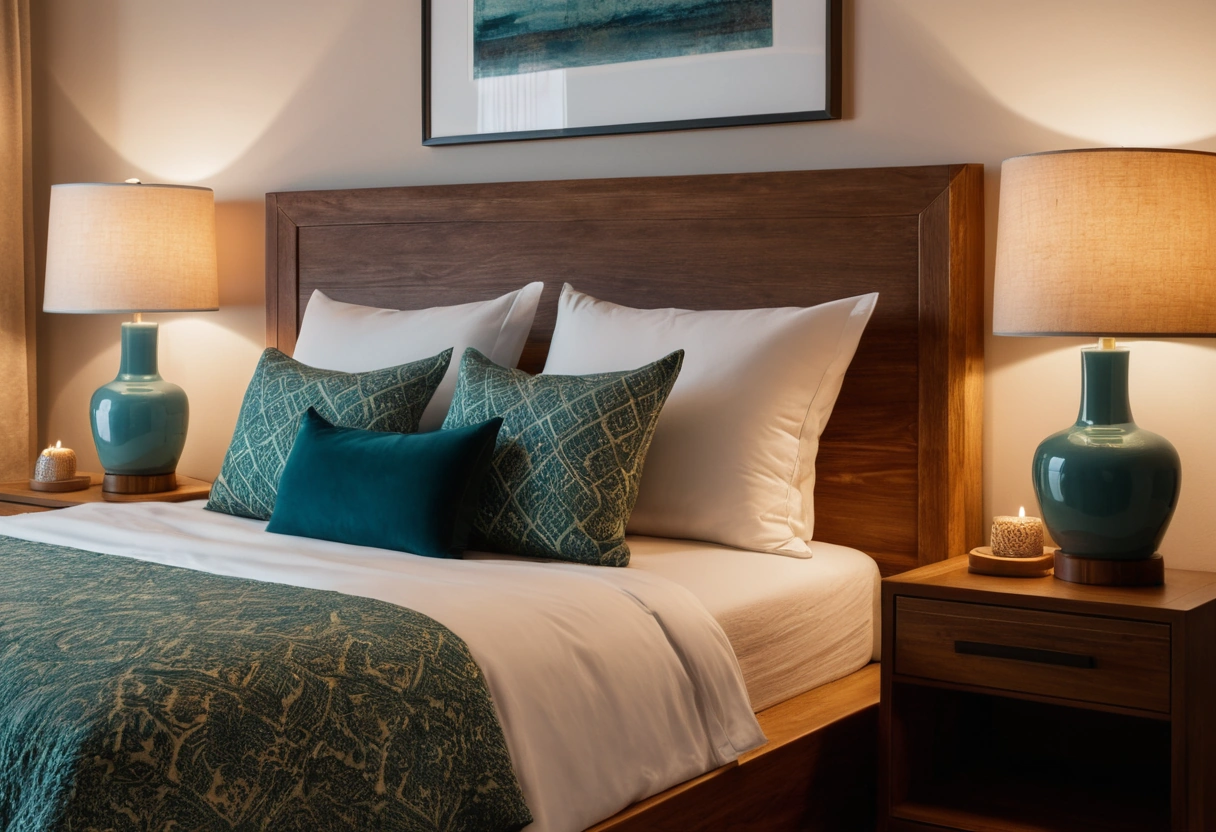
Set a bedside table lamp so the bottom of the shade lands 42 to 48 inches off the floor, right around eye level for a propped-up reader. Mount sconces with their centers 18 to 24 inches above the mattress top. Give each side of the bed 400 to 600 lumens of warm light for reading, and put the switch within arm’s reach of the pillow.
Start with the nightstand
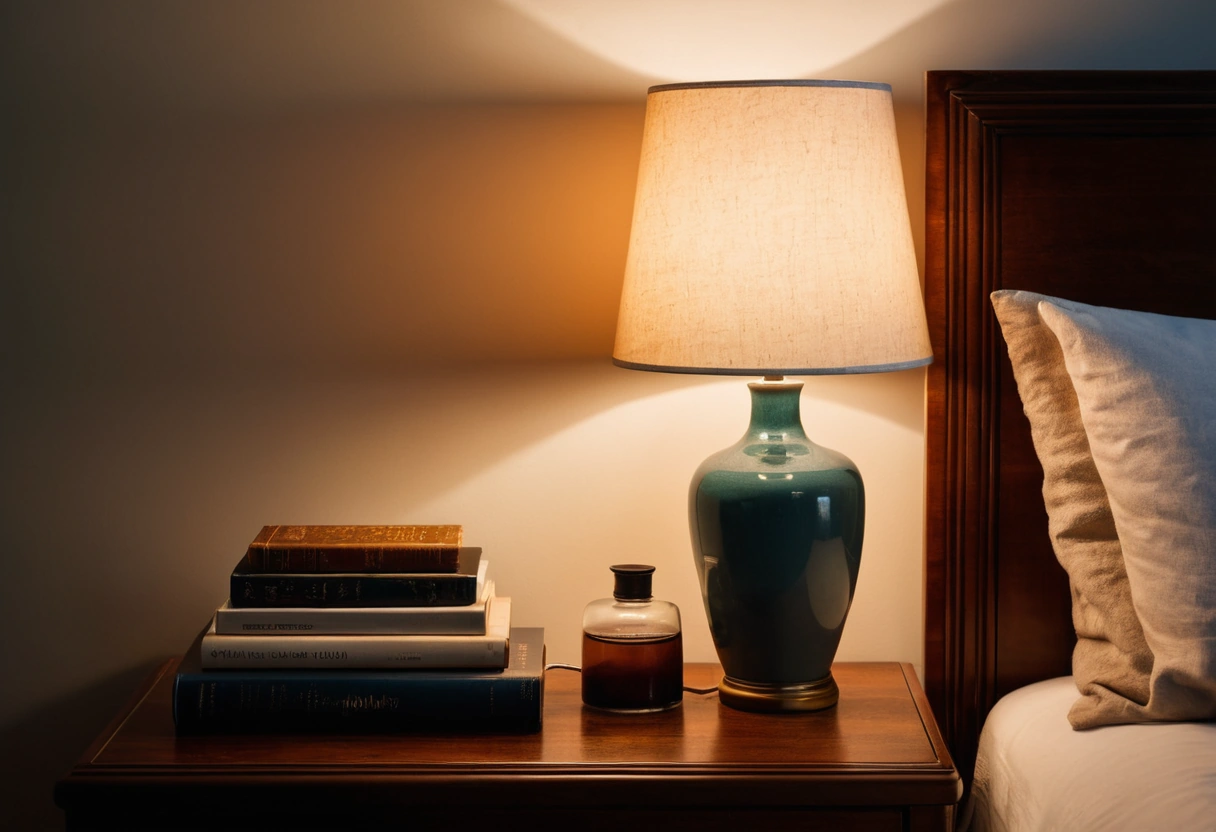
Lamp math starts under the lamp. The working convention: the nightstand top lands within 2 inches of the mattress top, which for most beds means 24 to 28 inches off the floor. A platform bed rides lower, a pillow-top on a box spring can crest 30 inches, so measure your own mattress before buying anything.
The nightstand’s height, its depth, and the walkway beside it are part of the bed wall’s geometry, worked out in bedroom clearance numbers. Get that right first, because a nightstand that’s too low drags the whole lighting stack down with it.
Table lamp height math
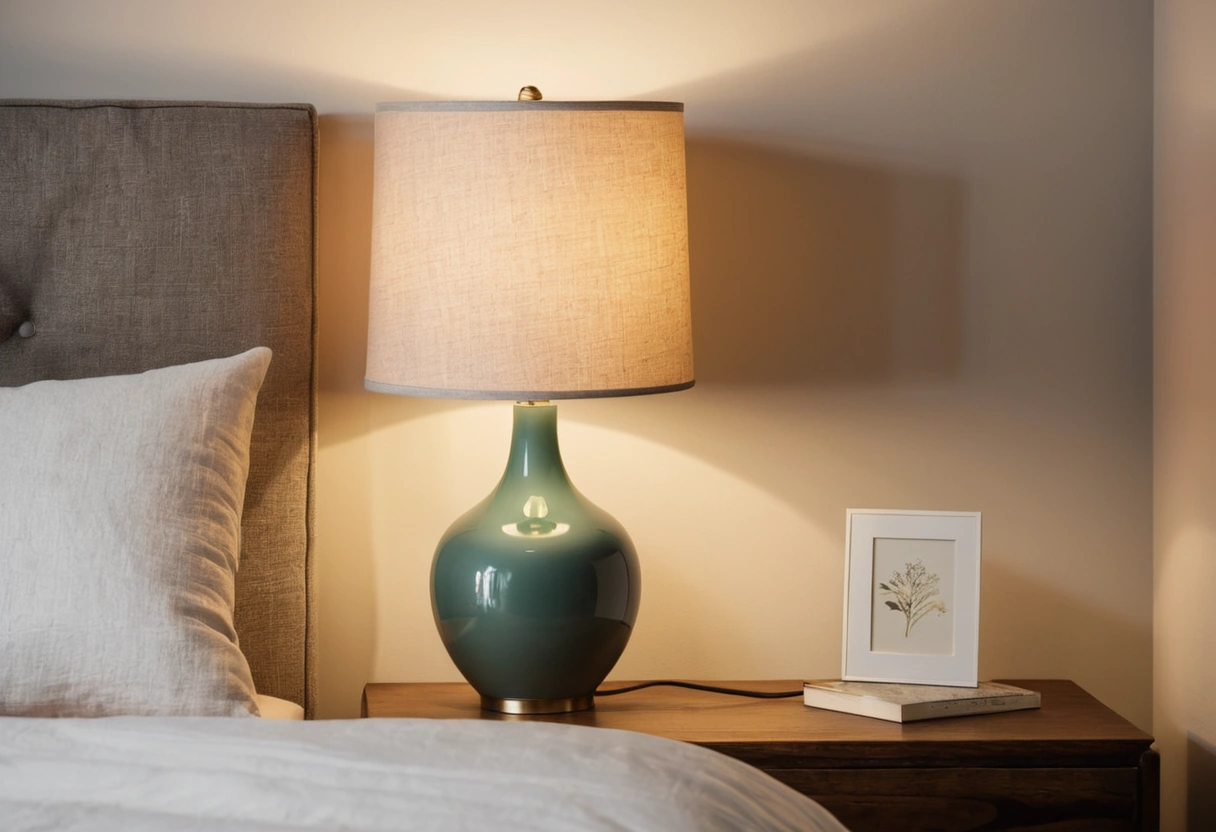
Standard bedside lamps run 24 to 27 inches tall, and the range exists because of where it puts the shade: on a 26 inch nightstand, the bottom of the shade lands around 42 to 48 inches off the floor, at the eye line of someone propped against the headboard.
The test costs nothing. Sit in your reading position and look at the lamp’s spot. Shade bottom at or just below eye level is right. Higher, and the bare bulb glares at you every time you lie back. Lower, and the light pools on the nightstand instead of the page.
Pair heights inversely: tall nightstand, shorter lamp; low platform setup, taller lamp. The sum is what matters, not either number. Shade choice tunes the result: a wider drum throws a broader pool across the bed, a linen shade glows and softens the room, and an opaque paper or metal shade keeps the light tight on the reader while a partner sleeps.
Sconce height and offset
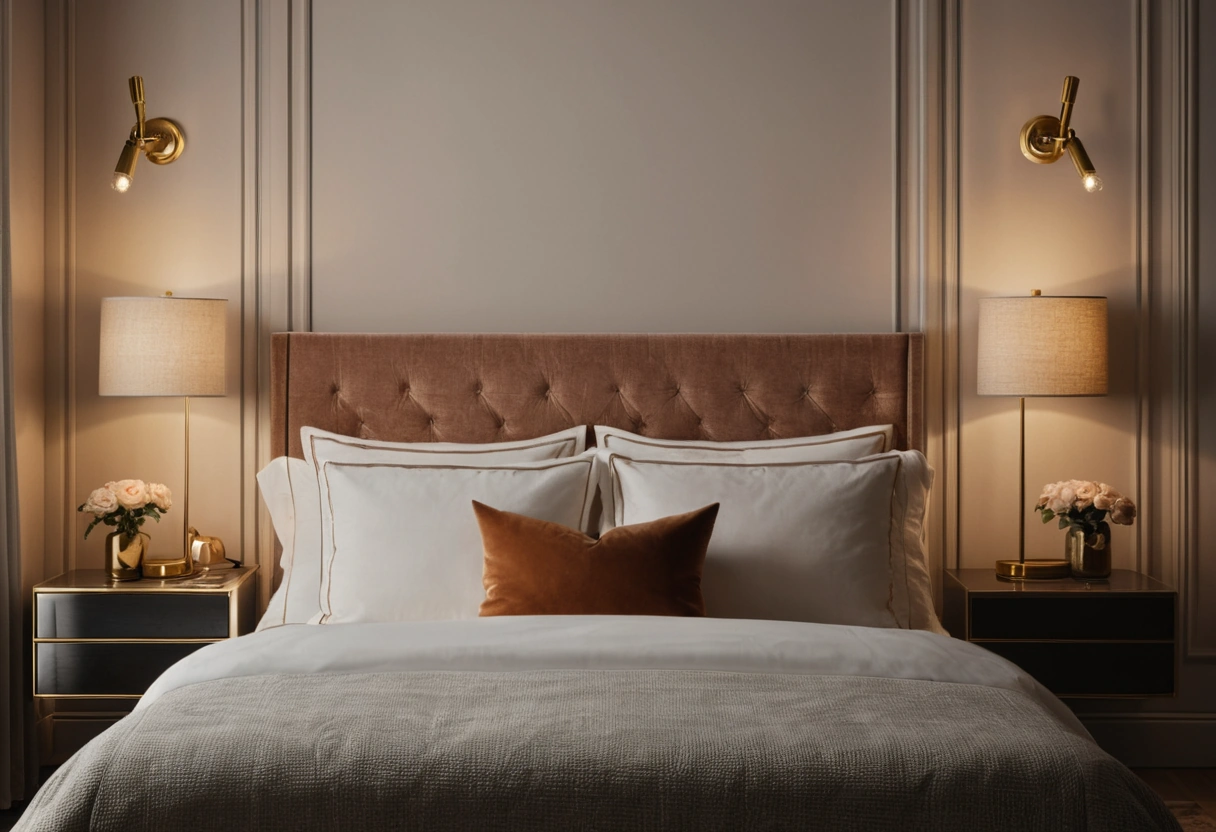
Wall sconces earn their place over small nightstands and in tight rooms. Mount them with centers 18 to 24 inches above the mattress top, which works out to roughly 48 to 55 inches off the floor for typical bed heights. That puts the source just above the shoulder of a seated reader.
Horizontal placement: the backplate sits just outside the mattress edge, or centered over the nightstand if there is one. A swing-arm model with 16 to 24 inches of reach is worth the upgrade: pull it over the page to read, push it back flat to clear the pillow. If partners read in different positions, an adjustable head forgives more than any fixed mounting height can.
Hardwiring is cleanest during a renovation; plug-in sconces with a cord cover are the honest retrofit, and they move out when you do, which makes them the renter’s answer too. Freeing the nightstand surface is half the point, and it pairs well with the rest of the small bedroom storage plans.
Bedside pendants follow the same geometry: hang the bottom of the shade at the same 42 to 48 inches off the floor, dropped just inside the nightstand’s footprint. They clear the surface entirely and read taller than a sconce, a good match for high ceilings.
Aim the light at the page, not your partner

Reading light works from above and slightly behind the shoulder, falling onto the page. In hardware terms: shades open at the bottom, aimable heads, or swing arms, not bare globes that broadcast in every direction. Check the bulb position too; a bulb that pokes below the shade line undoes everything the shade was hired to do.
The two-reader problem is solved by control, not placement: a separate switch and dimmer per side, and shades deep enough that one side’s light stays out of the other’s eyes. For the 2 a.m. reader, a focused low-glare head beats any shade in the catalog.
Bedside light is the task layer. The room still needs general fill from the ceiling and perhaps one accent, a split explained in layered lighting. Don’t ask one lamp to do all three jobs.
Brightness, bulbs, and switching
For reading, 400 to 600 lumens per side is the working range; small print and older eyes can push toward 800. Much beyond that starts lighting the room instead of the book, and the room-level budgets live in the room lumen cheat sheet.
Buy warm: 2700K, CRI 90 or better, dimmable, with dim-to-warm LEDs the nicest of all for the last hour of the day. The full spec logic is in bulb color temperature.
Plan the outlets while the furniture plan is still on paper: one behind each nightstand. A lamp cord stretched along a walkway reads worse than any lighting mistake above it.
Switching is where bedside setups fail in daily life. The rule: everything you need at night must operate without sitting up. A switch on the lamp base or on the cord at hand height, a wall switch mounted beside the bed, or a smart bulb tied to a bedside button all pass the test; a rotary switch buried under the shade fails it nightly. The ceiling light should run three-way, switched at the door and at the bed, so nobody crosses a dark room at midnight.
The bedside spec sheet
- Nightstand top within 2 inches of the mattress top.
- Shade bottom 42 to 48 inches off the floor; sit against the headboard and check.
- Sconce centers 18 to 24 inches above the mattress, backplates just outside the mattress edge.
- Swing arms with 16 to 24 inches of reach where space is tight.
- 400 to 600 lumens per side, 2700K, CRI 90, dimmable.
- Independent control per side; every switch reachable lying down.
- Ceiling light on a three-way: door and bed.