Small Bedroom Storage: Plans That Beat the Clutter
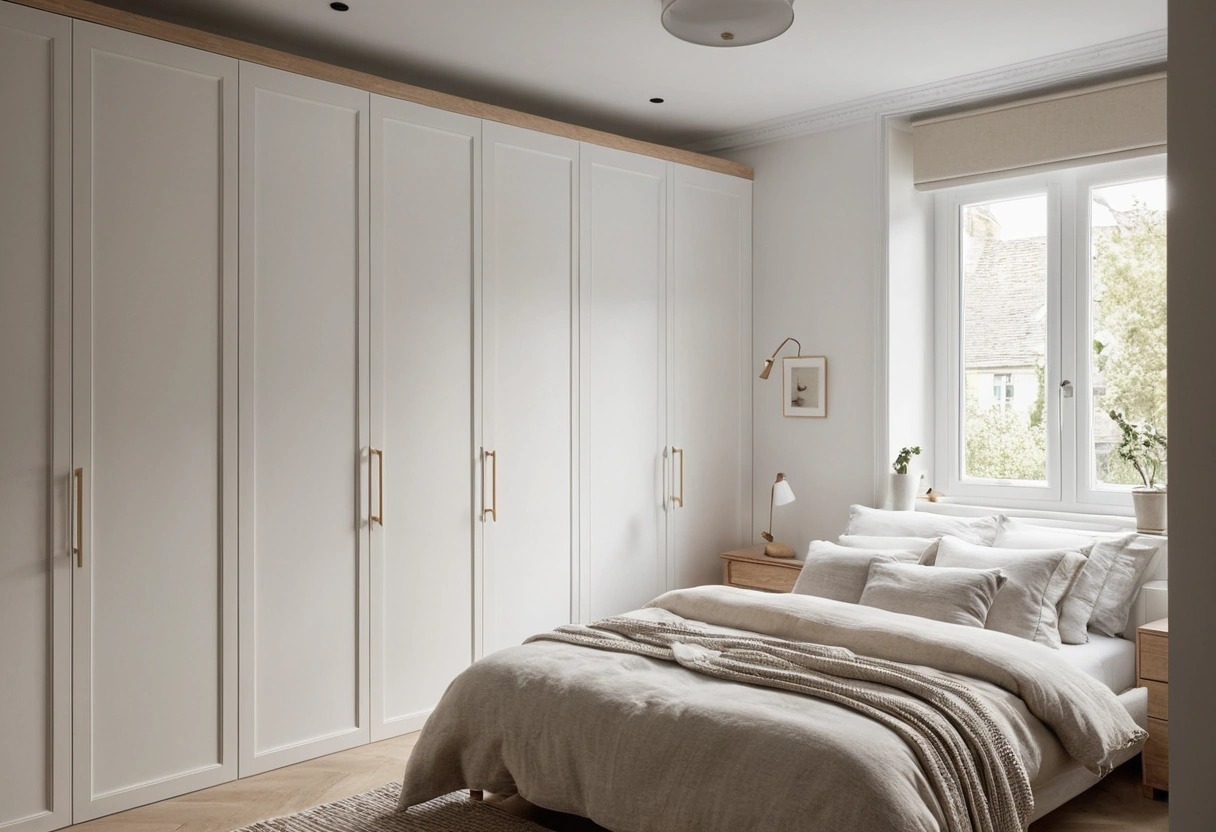
Small bedroom storage is subtraction first, hardware second. Move coats, shoes, and off-season clothes out of the room, then work the numbers: 6 to 12 inches of under-bed clearance, a 24-inch-deep wardrobe or an 18-to-20-inch-deep chest (rarely both), 4-to-6-inch-deep racks on the door, and a shelf line above it. A bedroom that stores only bedroom things stays organized on its own.
Move these out of the bedroom first
Clutter is usually a category problem, not a container problem. The bedroom earns its calm by keeping three categories: current-season clothes, bedding, and whatever you reach for from the bed. Everything else leaves:
- Coats, bags, and daily shoes belong at the door, not in the closet. A hook rail and a slim cabinet by the entry hold them in a strip of floor; see small entryway ideas.
- Off-season clothes go to the highest closet shelf, a hall closet, or sealed bins. They need access twice a year, so they shouldn’t occupy eye-level real estate for twelve months.
- Paper, gear, and hobby supplies migrate to the living areas. A small bedroom asked to double as an office and a gym stores its way into permanent mess.
Every category you remove frees a container, and every freed container is storage you didn’t have to buy.
Under the bed: heights and what fits
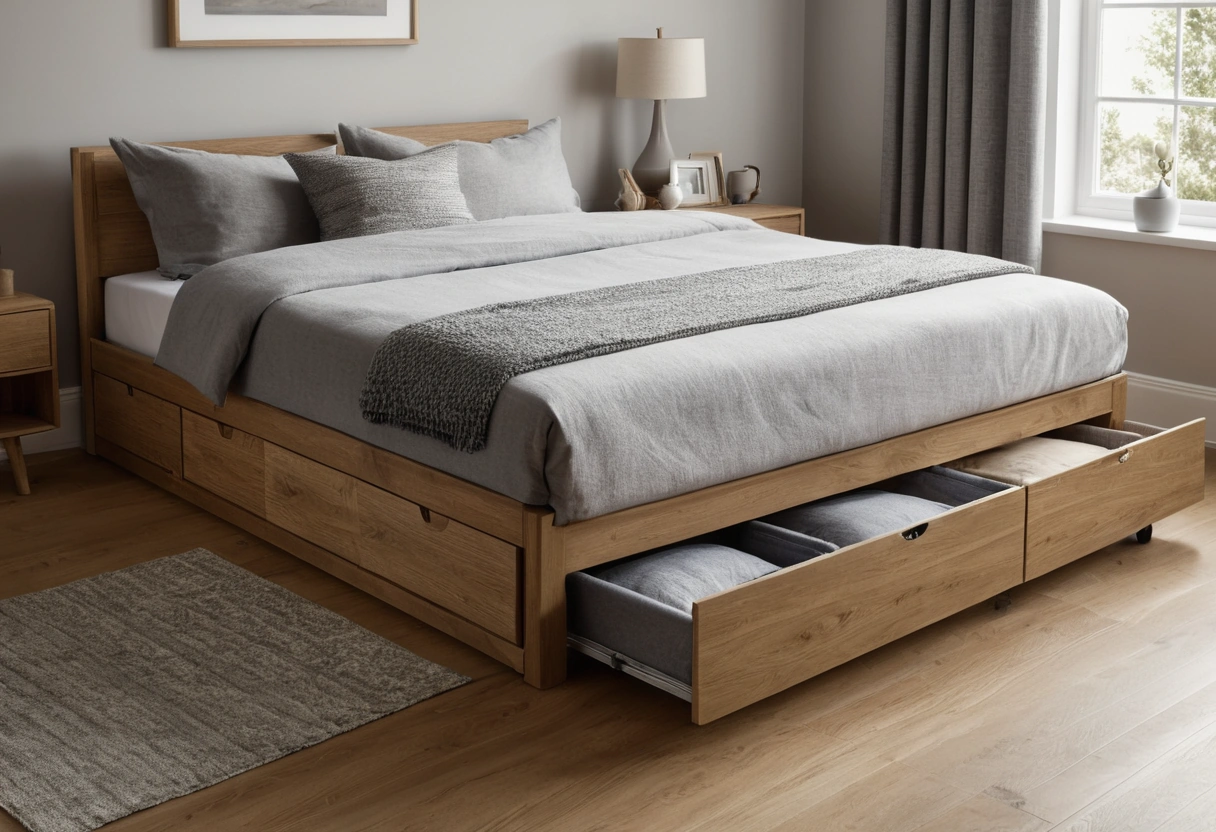
Standard bed frames clear 6 to 8 inches of floor. That fits low bins about 6 inches tall, the right size for sweaters, spare linens, and off-season layers. Measure your actual clearance and subtract an inch so lids slide rather than scrape, and pick bins with wheels once they run deeper than about 24 inches.
Risers add 3 to 5 inches of height if you can live with the look. The cleaner upgrade is a storage bed: drawer models give two to four drawers about 6 to 8 inches deep, and hydraulic lift-up platforms open the entire mattress footprint to roughly 12 inches of depth, the single largest hidden volume a small bedroom can add. Whether a storage bed beats a plain frame plus bins is a price-and-weight tradeoff we cover in multifunctional furniture.
Wardrobe vs. dresser: the footprint math
| Piece | Typical footprint | What it holds |
|---|---|---|
| Wardrobe or armoire | 24 in. deep, 36 to 48 in. wide, 72 to 84 in. tall | Hanging clothes plus shelves |
| Double dresser | 18 to 20 in. deep, 54 to 64 in. wide, 30 to 34 in. tall | Folded clothes, wide and low |
| Chest (tallboy) | 18 to 20 in. deep, 30 to 36 in. wide, 48 to 54 in. tall | Folded clothes, stacked high |
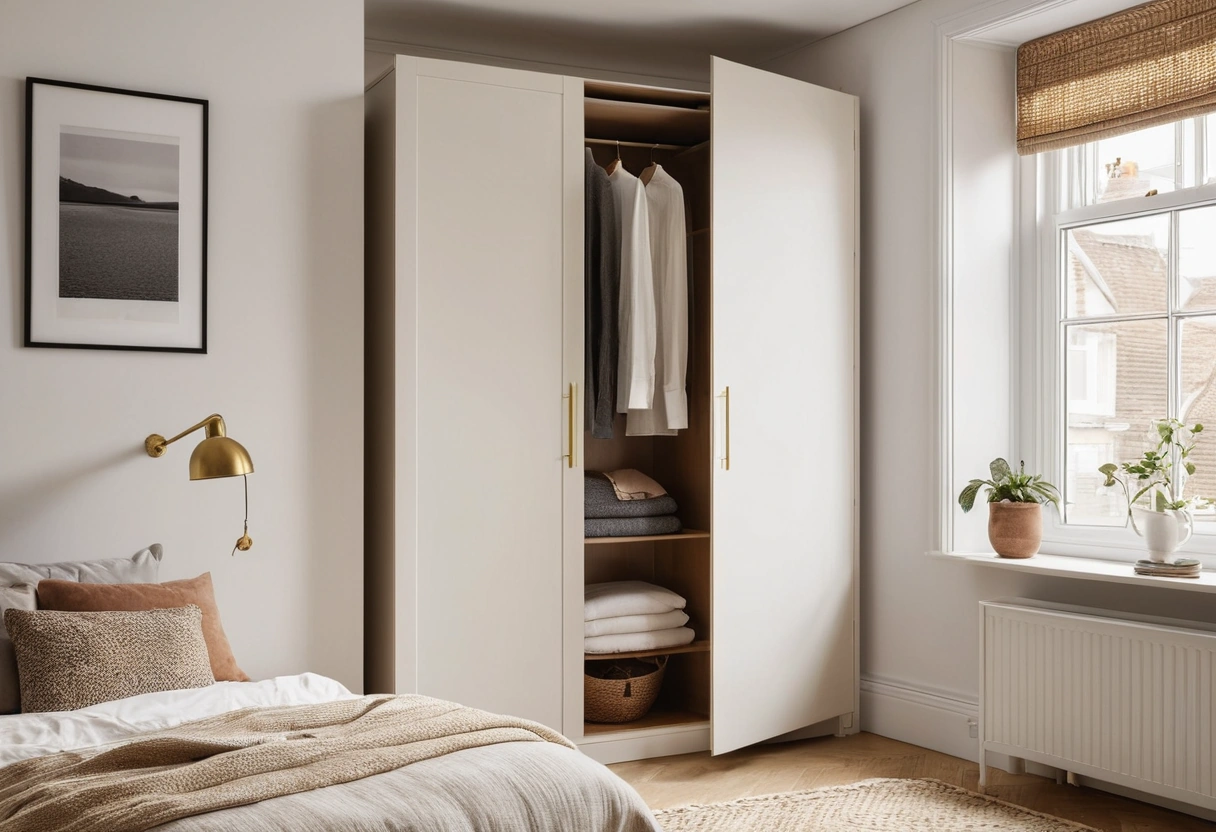
Per square foot of floor, vertical wins. A chest stores nearly as much as a double dresser on roughly half the footprint, which is why the classic small-bedroom pair is one chest plus the closet, no dresser at all. Buy the wardrobe only if the room has no closet; at 24 inches deep it is the hungriest piece on the list.
Whatever you pick needs operating room: about 36 inches of clear floor in front of any drawer or door, on top of the walkways around the bed. Those clearance numbers are laid out in our bedroom layout guide, and they decide placement more than taste does.
Inside the closet, one upgrade beats all others: a second rod. Double-hanging at roughly 40 and 80 inches turns one run of shirts and pants into two, doubling capacity for the cost of a rod.
The closet door itself is negotiable. A pair of hinged doors owns a swing arc of several square feet that nothing else can use; swapping to bifold doors cuts that arc by half, and sliding bypass doors cut it to zero at the cost of seeing only half the closet at once. In a room where the bed and the closet fight for the same floor, the door swap is often what ends the war.
Doors and walls: the storage nobody counts
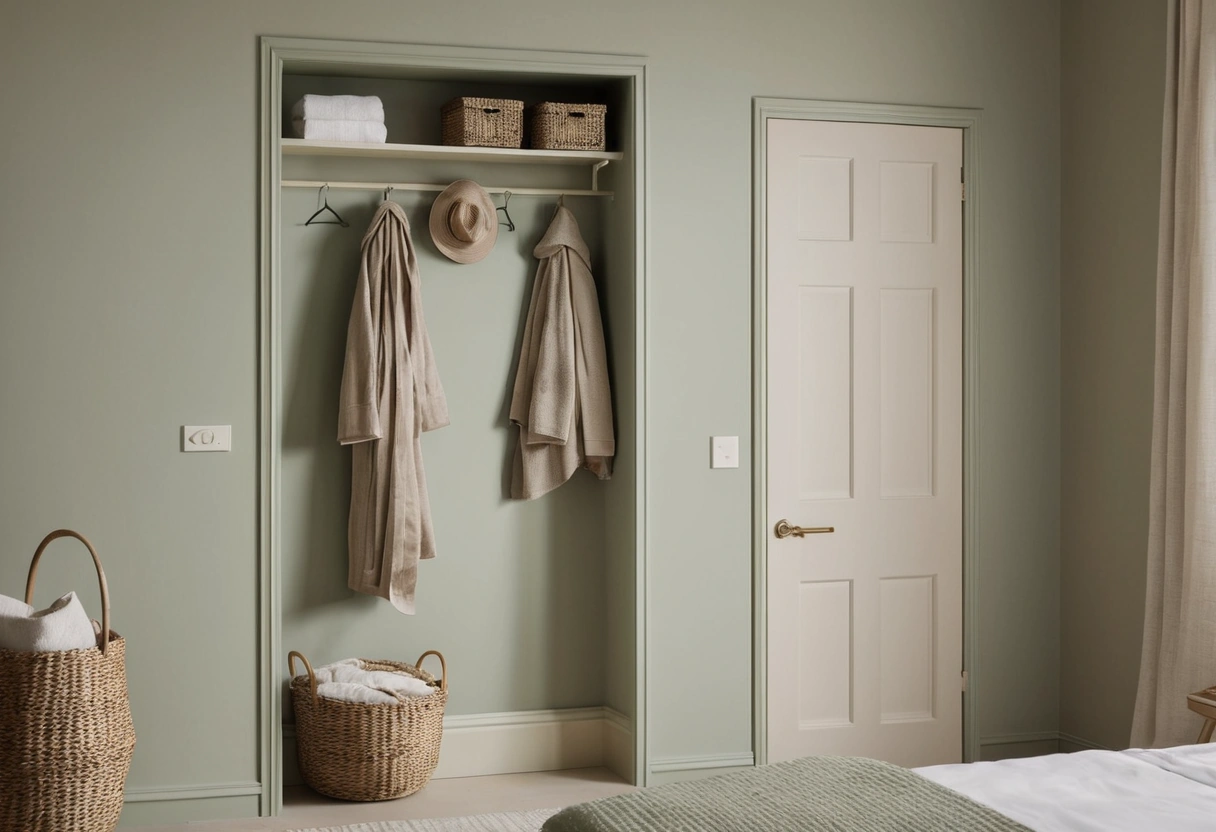
The back of the door is about 20 by 80 inches of free real estate. An over-door rack 4 to 6 inches deep holds shoes, scarves, or bags without a single screw; just confirm the door still clears its frame with the rack loaded.
Walls carry more than people give them credit for. A shelf run above the door and windows at 78 to 80 inches stores books and bins in space no furniture can reach. A picture ledge behind the headboard holds glasses and a phone where a nightstand won’t fit. Hooks at 60 to 66 inches take robes and tomorrow’s outfit. Two cautions: anchor everything into studs or rated anchors, and keep heavy items off the wall directly over the pillow.
Restraint is part of the plan. Storage climbing every wall reads as clutter with lids on it. Keep at least one wall bare and surfaces mostly empty; clear planes do more for a small room’s sense of space than any organizer, as our guide to making a small room look bigger lays out.
The storage plan checklist
- Evict three categories first: entry gear, off-season clothes, non-bedroom projects.
- Under the bed: measure clearance, buy bins an inch shorter, wheels past 24 inches deep.
- Choose one clothes tower: chest plus closet in most rooms, wardrobe only with no closet.
- Keep 36 inches of clear floor in front of every drawer and door.
- Add a second closet rod at 40 and 80 inches before buying any furniture.
- Claim the door back and the over-door shelf line; leave one wall empty on purpose.
Run the subtraction, then the numbers. Most small bedrooms don’t need more storage; they need less inventory and taller containers.