Countertop Materials Compared: Quartz, Granite, and More
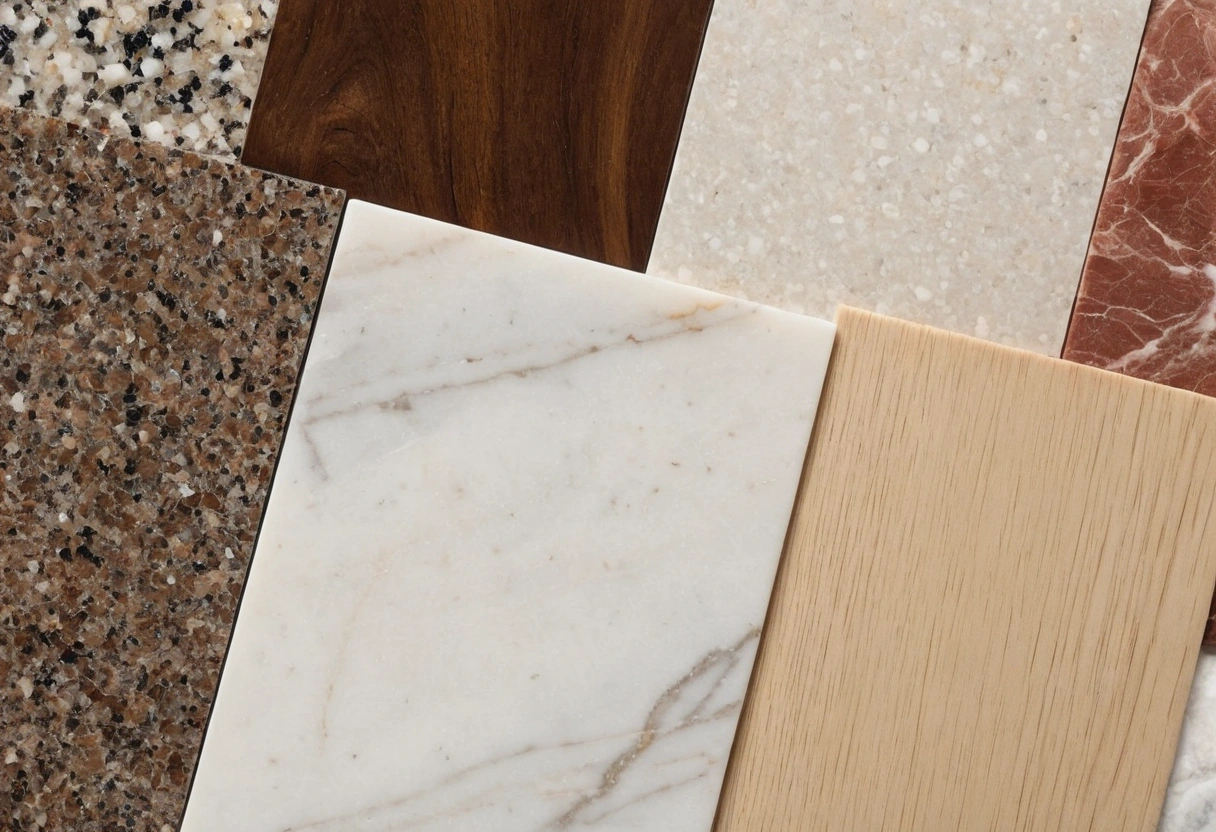
Typical installed costs per square foot: laminate $20 to $50, butcher block $30 to $80, solid surface $40 to $80, granite $40 to $100, quartz $50 to $100, quartzite $60 to $120. Quartz never needs sealing but its resin scorches above roughly 300°F; granite and quartzite take hot pans but want periodic sealing. Pick by how you actually cook and clean, not by the showroom slab.
What each material costs installed
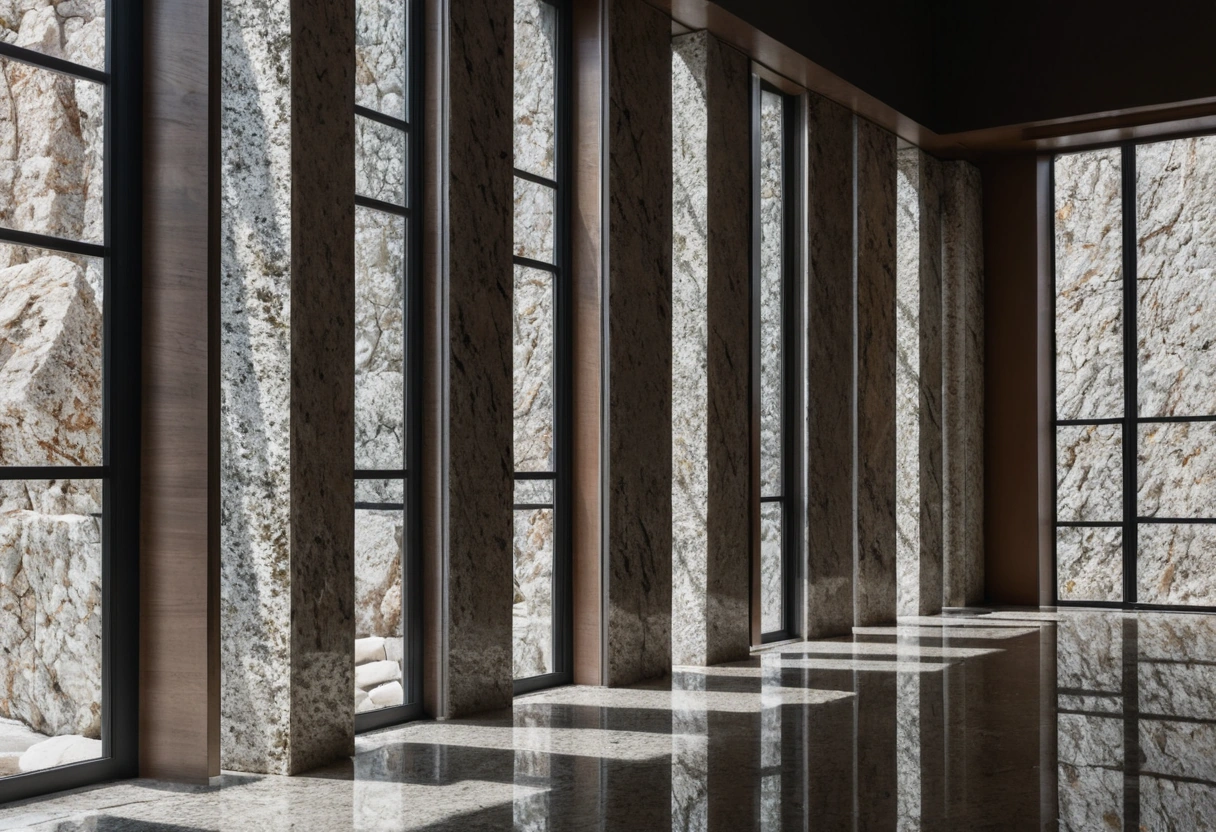
| Material | Typical installed cost per sq ft | Sealing | Hot pans |
|---|---|---|---|
| Laminate | $20 to $50 | Never | No |
| Butcher block | $30 to $80 | Oil on a schedule | No |
| Solid surface | $40 to $80 | Never | No |
| Granite | $40 to $100 | About yearly | Yes |
| Quartz | $50 to $100 | Never | No |
| Quartzite | $60 to $120 | Once or twice a year | Yes |
These are broad typical ranges. Rare slabs, thick edges, and complicated sink cutouts push any of them up, and fabrication plus installation often makes up a third to half of the final bill. Small jobs price by minimum charge rather than by the square foot, which is why a powder room vanity top rarely tracks the per-foot math.
How each surface handles heat, stains, and scratches
Granite and quartzite are the heat-proof pair; a pan straight off the burner won’t mark them. Quartz is mostly ground stone, but it’s bound with polymer resin, and that resin can discolor or crack under sustained heat. The working rule is a trivet for anything over roughly 300°F. Solid surface scorches around 350°F, though damage sands out. Laminate scorches and stays scorched.
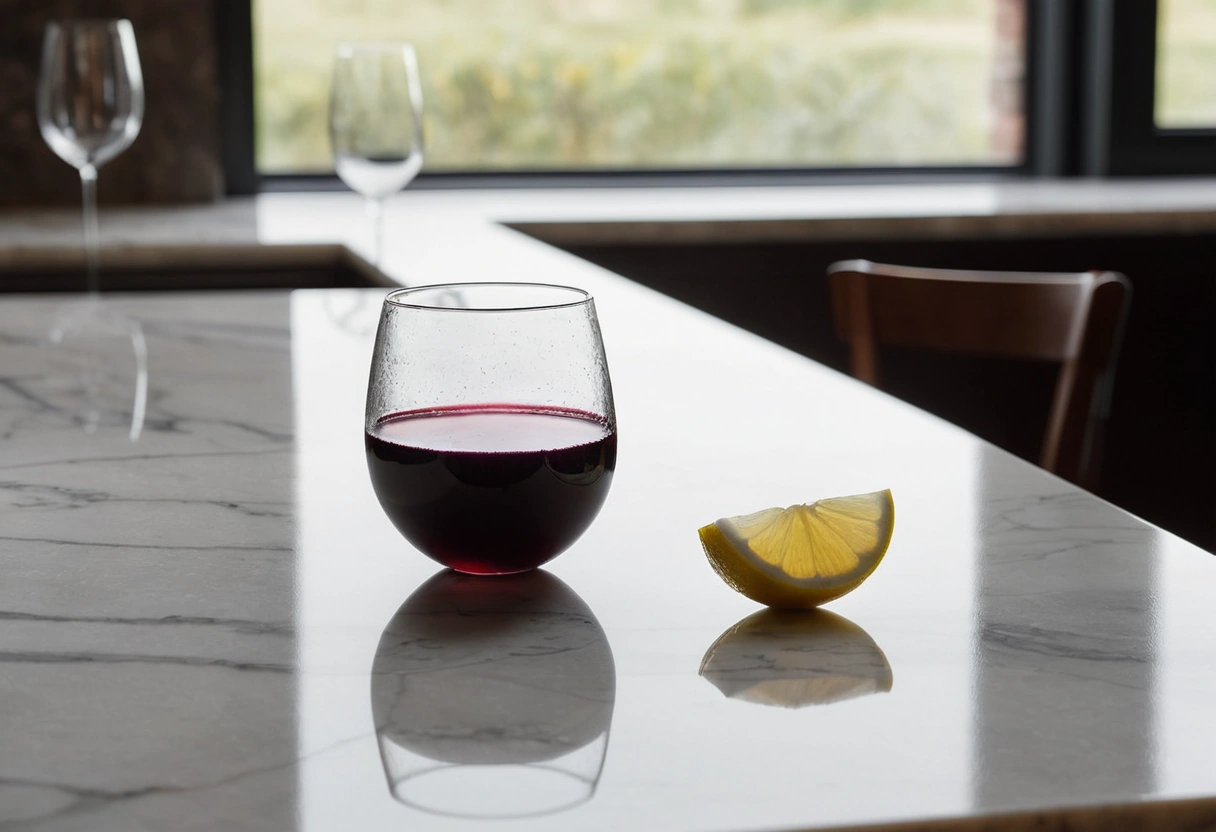
Stains run the other way. Quartz and solid surface are nonporous and shrug off wine, coffee, and oil. Sealed granite resists well; let the seal lapse and oils leave shadows. Quartzite varies slab to slab, so test a sample overnight with lemon juice and olive oil before committing. Butcher block stains, scorches, and collects knife marks, and every one of them sands out, which is the entire bargain with wood.
On scratches: quartzite is hardest, then granite and quartz, then solid surface and laminate, with butcher block softest. None of them should meet a knife directly except the butcher block.
Maintenance schedules you’ll actually follow

- Quartz, solid surface, laminate: soap and water. Nothing scheduled, ever.
- Granite: reseal roughly once a year. The test is a water drop; if it soaks in and darkens the stone within a few minutes instead of beading, it’s time.
- Quartzite: reseal once or twice a year, same water-drop test.
- Butcher block: food-grade mineral oil monthly for the first year, then quarterly, plus a light sanding and re-oil wherever scars build up.
A reseal is a wipe-on bottle and 30 minutes; oiling a wood top takes 10. None of it is hard. The only real question is whether it will happen in your house, and the honest answer should steer the purchase.
Edges, seams, and slab sizes
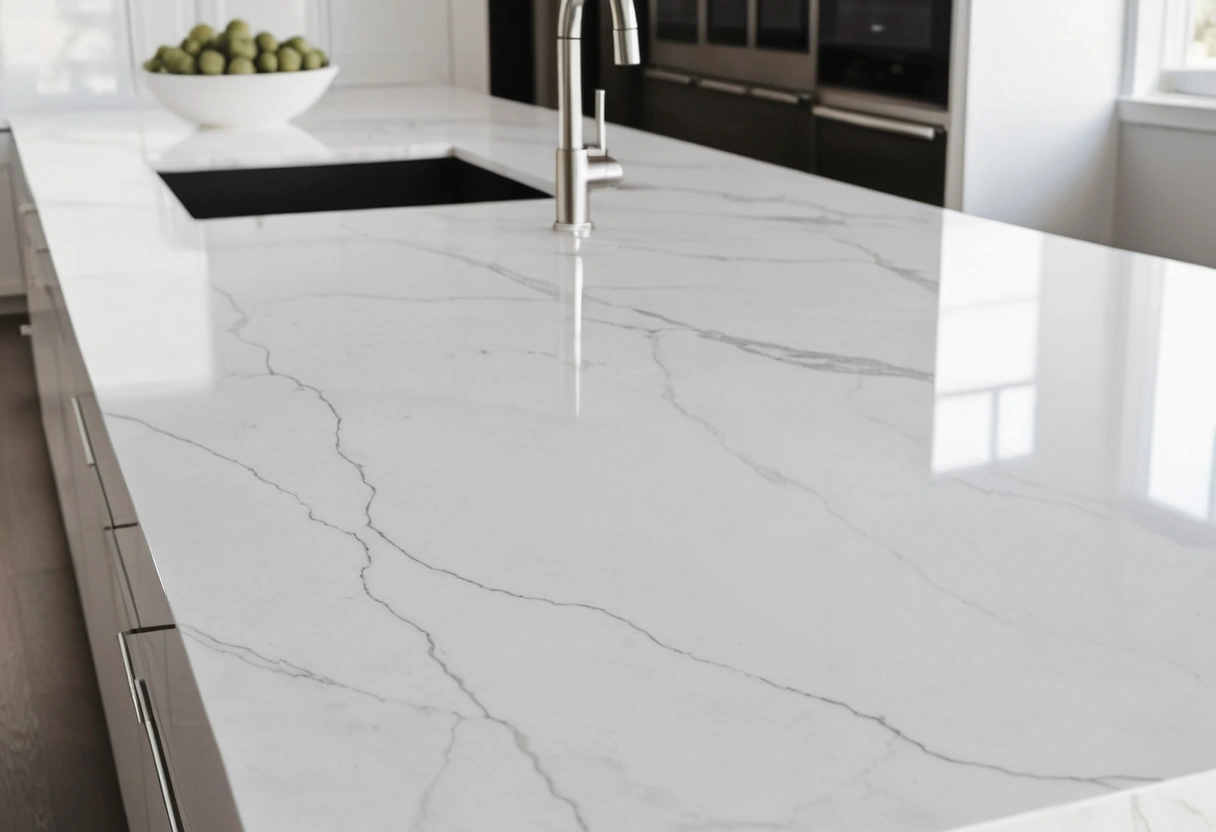
Standard stone and quartz slabs run roughly 110 to 130 inches long by 55 to 65 inches deep, so a counter run past about 10 feet, and most L shaped layouts, will carry a seam. A good fabricator lands seams away from the sink and cooktop and out of the main sightline; ask to see the seam plan before anything is cut. Solid surface is the exception, since its joints are chemically fused and sanded until they all but vanish, which is also what makes its integrated sinks possible.
Edge profiles price in tiers: eased, quarter round, and bevel usually come standard, while ogee and waterfall edges add real money. An eased edge also chips least, worth knowing in a household of dropped pots.
The working dimensions are standardized: counters sit 36 inches high and 25 1/2 inches deep, with a 1 1/2 inch overhang past the cabinet face. A seating overhang on an island runs 12 to 15 inches for knee room, and the convention is added support, brackets or steel, once stone hangs past about 10 inches. Order thickness by look: 3 cm reads substantial and skips the built-up edge most 2 cm tops need.
Matching the counter to the kitchen
In a hard-working family kitchen, quartz earns its price: no sealing, strong stain resistance, and consistent slabs you can approve from a sample. Cooks who set hot pans down without thinking are the case for granite or quartzite. Butcher block is happiest on an island baking station or a coffee bar, away from the sink. Laminate is the honest budget answer for a rental or a five-year kitchen, and current prints are better than their reputation.
The counter is also a fixed finish everything else must answer to. Choose it before wall color, then test paint against it using the logic in our guide to warm vs. cool neutrals; the faucet and cabinet hardware should anchor your plan for mixing metal finishes the same way. On an island, the slab is the stage for whatever hangs above it, so size the fixtures with our numbers for pendant height over an island. And no slab rescues a bad plan: hold the aisle widths from the kitchen work triangle, and where a full-depth counter won’t fit, borrow the workarounds in our small kitchen layout guide.
The short list
- Set-and-forget family kitchen: quartz, $50 to $100 installed.
- Hot pans land bare: granite or quartzite, resealed on schedule.
- Tight budget or rental: laminate at $20 to $50, in a matte finish.
- Warm, repairable, hands-on: butcher block plus the oiling habit.
- Integrated sink and near-invisible joints: solid surface.
- Any run over 10 feet: ask where the seam lands before you sign.