Mixing Metal Finishes: Brass, Black, Nickel, and Chrome
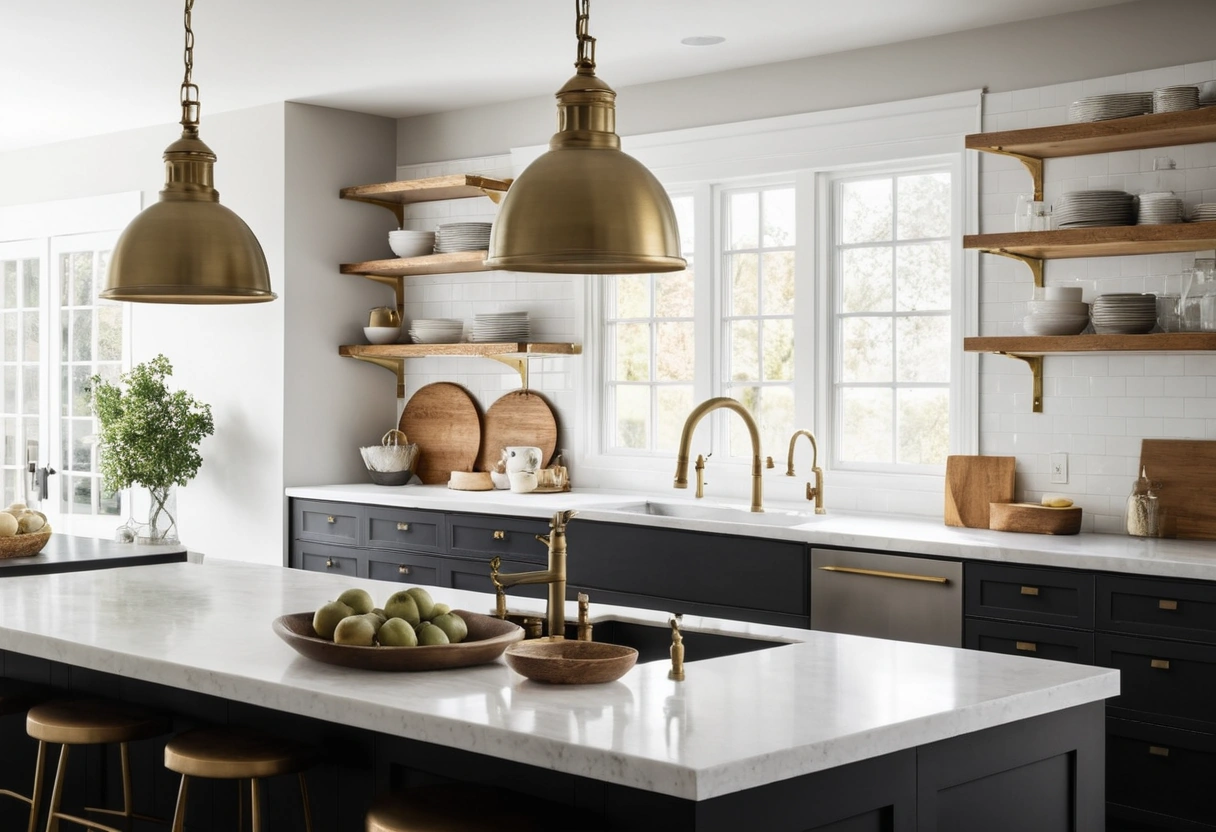
The working rules: two metal finishes per room, three at the most. One primary carries about two-thirds of the visible metal; each accent repeats at least twice so it looks chosen. Sort metals by temperature: brass, gold, copper, and bronze are warm; chrome, polished nickel, and stainless are cool; matte black and iron are neutral and mix with anything. Start from the metals you can’t easily change, the faucets, door hardware, and appliances.
Warm, cool, and neutral: the metal families

The warm family covers polished, brushed, and antique brass, unlacquered brass (which darkens with use), gold tones, copper, and oil-rubbed bronze. The cool family is chrome, polished nickel, and stainless steel. Brushed nickel sits nearest the fence, a soft gray with a faint warm cast, which is exactly why it pairs with more than chrome does. The neutrals are matte black, wrought iron, and pewter; they behave like a black shoe and go with everything.
Mixing inside one family barely counts as mixing; brushed and antique brass in one kitchen read as a single decision. Crossing families is where the method matters. Reading a metal’s temperature is the same squint you use to sort warm and cool neutrals in paint: hold two finishes side by side and the lean is obvious, on a shelf they hide it.
The primary-plus-accent method
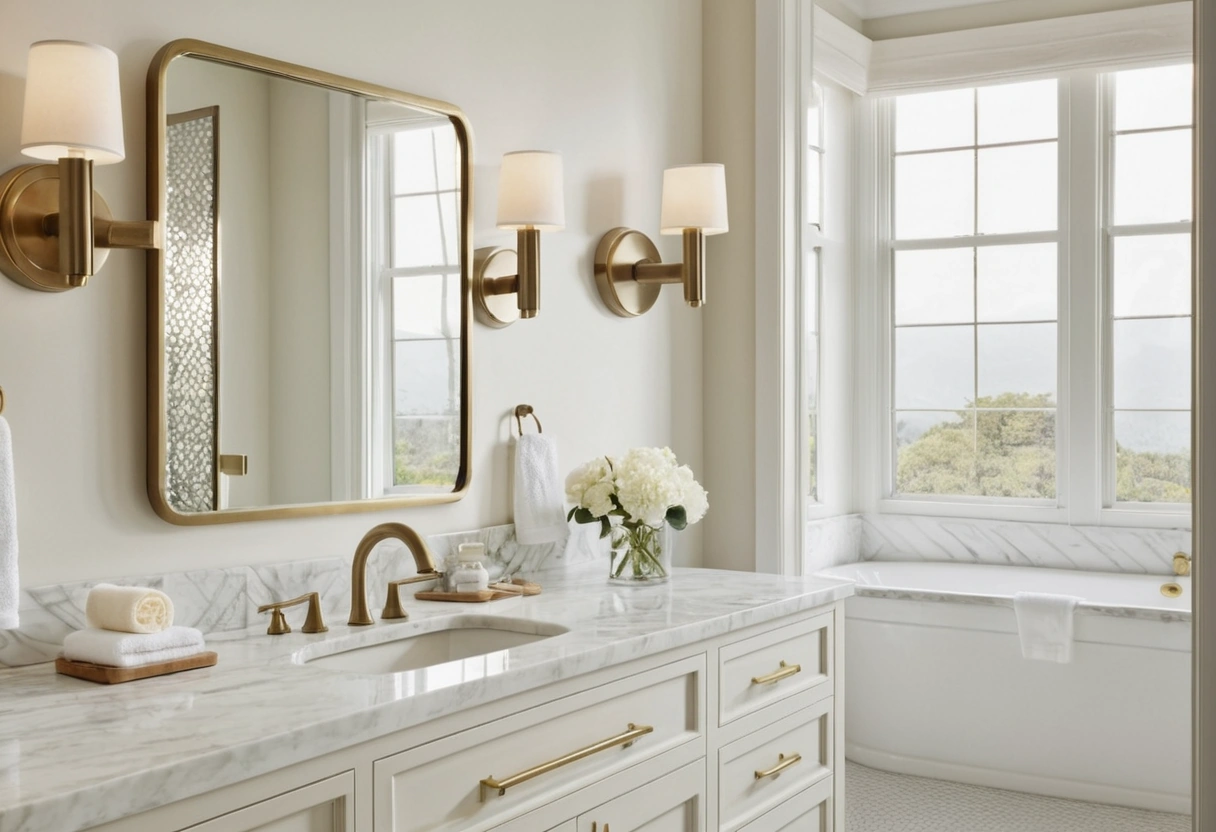
Pick one primary metal and let it carry roughly two-thirds of the visible metal in the room. Add one accent, or two in a large open plan, and repeat each accent at least twice, ideally three times. Then spread the repeats by height: lighting up high, faucet and cabinet hardware at the middle, lamp bases and table legs down low. A room reads as composed when a metal shows up at more than one level.
Three failure modes cover most real rooms. A 50/50 split between two metals reads as indecision. A single lone brass frame in a chrome room reads as an accident. And a different finish on every object, the hardware-aisle special, reads as no decision at all. The fix in each case is the same: promote one metal, demote the rest to repeated accents.
Two proven recipes to steal outright. Kitchen: brushed brass on cabinet hardware and faucet as the primary, matte black on pendants and stools as the accent, stainless appliances ignored as background. Bathroom: polished nickel on all the plumbing, aged brass on the mirror and sconces, black on the door hardware as the free neutral. Both follow the two-thirds split without a tape measure.
Fixed metals are your anchors
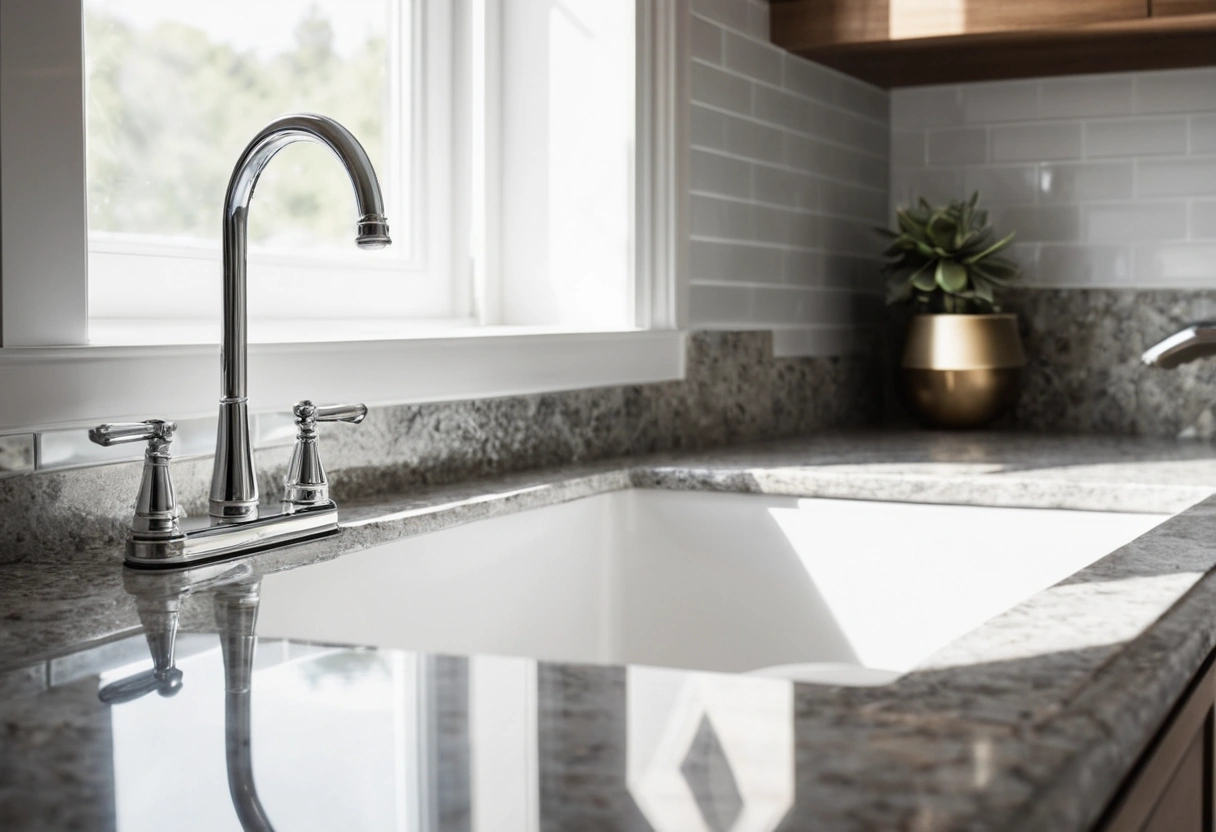
Before buying anything, inventory the metals that won’t move: faucets, shower trim, door and window hardware, appliance fronts, railings, a fireplace insert. In most homes the primary has already been chosen by whoever picked the plumbing. Working with it costs nothing; working against it means replacing fixtures at plumber prices.
Two conventions make the inventory easier. Stainless appliance fronts read as background in a kitchen and stay out of the metal count. Painted fixtures count as color, not metal. That usually leaves the faucet and cabinet hardware as the true primary, with light fixtures as the natural accent carrier; if those hang over an island, set their drop with our numbers for pendant spacing over an island before you fall for a finish.
Consistency rules, room by room
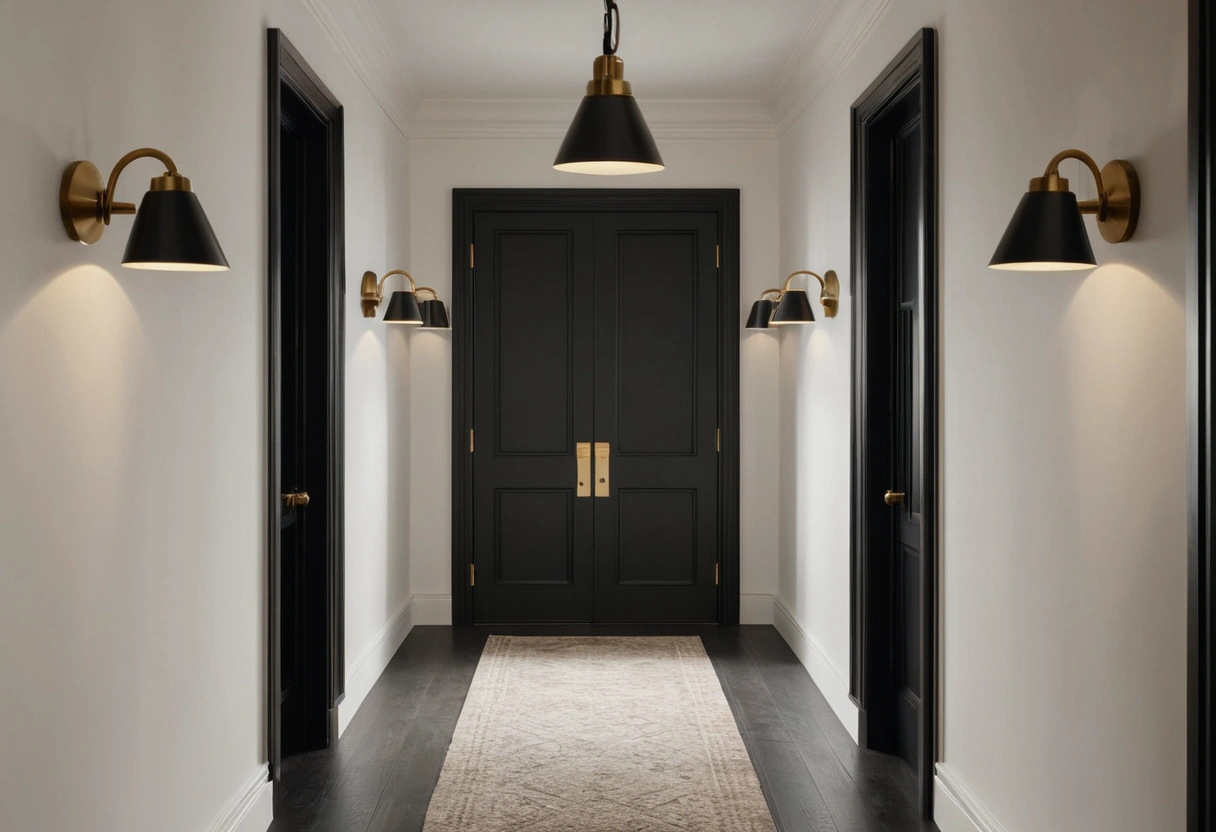
Within a single bathroom, plumbing matches itself: faucet, shower trim, and towel bars in the primary finish. The mirror frame and the lighting are where the accent metal belongs, positioned per our vanity lighting guide. Kitchens run the same way, faucet and hardware as primary, pendants and stools carrying the accent.
Across the house, rooms don’t need identical recipes, but one metal should recur in every room as the connecting thread, the same job the anchor neutral does in a whole-house color palette. Sightlines set the strictness: metals visible in a single glance across an open plan should share one recipe, while a door you close buys the room behind it more freedom. Interior door hardware is the cheapest place to build the thread, since one finish on every knob and hinge line reads as intention from any hallway.
Sheen is the second axis
Every finish also has a sheen, and it changes the rules. Polished surfaces show fingerprints and water spots and sparkle back; brushed and satin finishes hide daily wear; matte hides everything. The practical split: brushed finishes in kids’ baths and hardworking kitchens, polished in powder rooms and formal spaces where the sparkle is worth the wiping.
The trap is the near miss: polished nickel beside brushed nickel reads as a purchasing error, not a mix. Two clearly different metals combine better than two versions of the same one, the identical rule to the near-miss stain problem in mixing wood tones. Contrast on purpose, or match exactly; never almost.
The room check
- Inventory fixed metals first; the primary usually picks itself.
- Two metals, three at most; the primary carries about two-thirds.
- Repeat each accent at least twice, at different heights in the room.
- Matte black is a free neutral almost anywhere.
- Never pair near-miss finishes of the same metal; contrast or match.
- Bathroom plumbing matches itself; accents go to the mirror and lights.
- Carry one metal through the whole house as the thread.