Mixing Wood Tones: A Working Method for Real Rooms
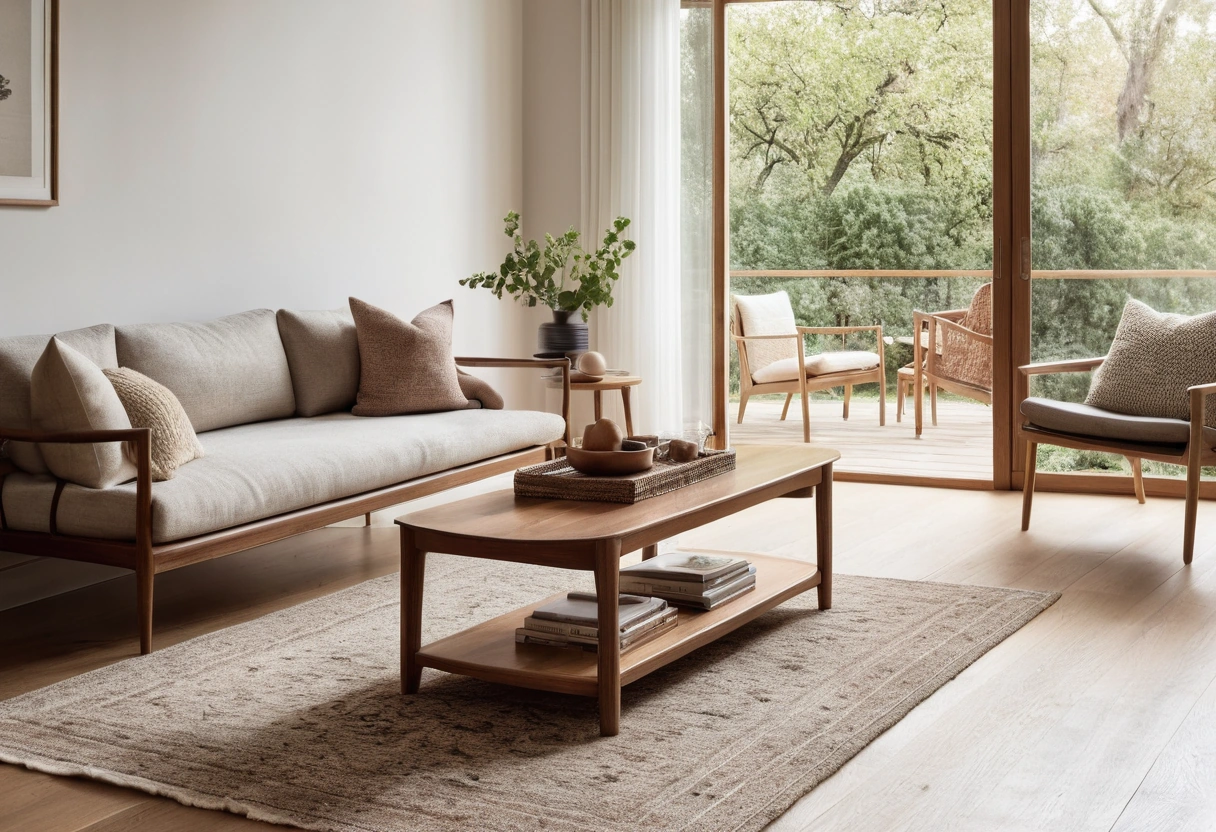
The method: let the largest wood surface, usually the floor, set the dominant tone. Add at most two more woods. Match their undertones, warm or cool, rather than their colors. Repeat each supporting tone at least twice so it reads as a choice, and put a rug, paint, or fabric between any two woods that argue. That’s the whole system; the rest is applying it room by room.
Start with the dominant tone
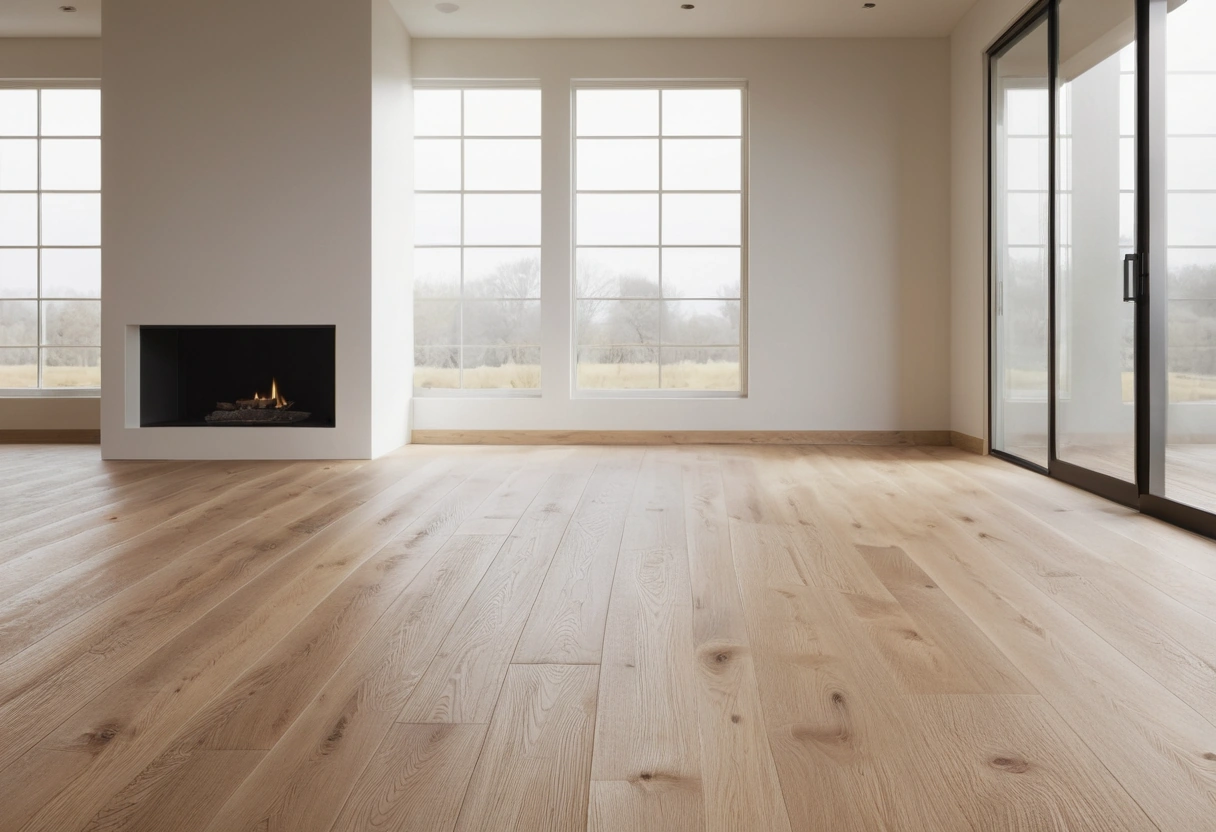
In most rooms the floor is the dominant wood for the simple reason that it’s the largest surface. In a carpeted or tiled room, the biggest wood piece, a dining table or a wall of cabinets, takes the job instead. Every other wood in the room gets judged against the dominant one, so name it before you shop and carry a sample of it, a spare plank, a drawer, a good photo in daylight.
If a new floor is part of the project, settle it first, because it outvotes every stick of furniture afterward. The cost and lifecycle side of that decision is covered in our comparison of hardwood and LVP flooring; the tone you pick there is the tone the whole room answers to for decades.
Match undertones, not colors
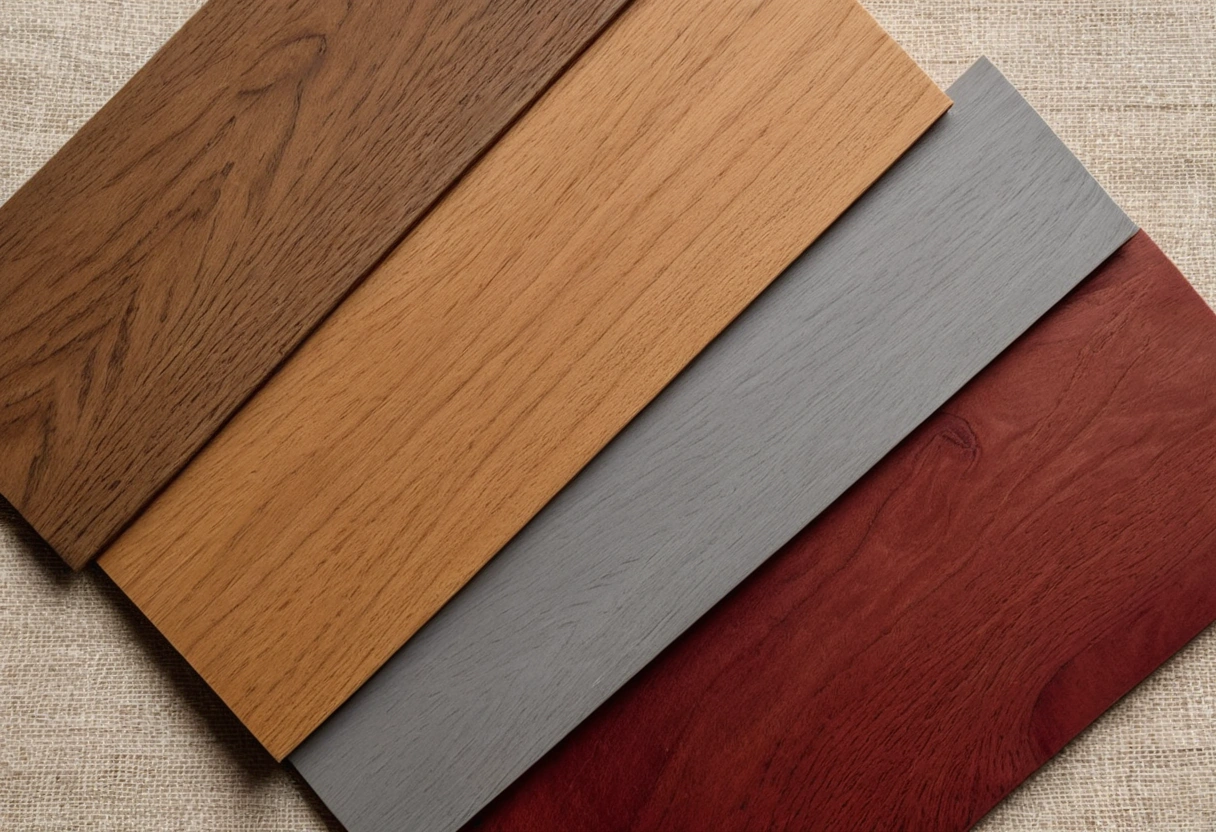
Undertone is the hue underneath the stain. Warm woods lean red, orange, or yellow: cherry, mahogany, red oak, teak. Cool woods lean gray or ashy: driftwood finishes, gray-washed oak, some stained walnuts. Neutrals sit between, and white oak is the workhorse of that group. Two woods of very different depth, one dark and one light, coexist happily when their undertones agree. Two woods of nearly the same color clash when one leans pink and the other yellow.
Reading the lean is the same skill as reading paint undertones: comparison, not memory. Lay the candidate sample directly on or against the dominant wood, in daylight, and the lean shows in seconds. A plain white card behind both samples sharpens the read further. Judged alone under store lighting, every wood looks “brown,” which is how orange-oak side tables end up in gray-washed rooms.
Grain and sheen are the quiet second axis. A tight, straight grain (maple, walnut) mixes more calmly than a loud cathedral grain (red oak), and a glossy lacquered piece beside a matte waxed one will read as different even when the tones agree. When a mix feels off but the undertones check out, sheen is usually the culprit.
Cap the mix at two or three tones
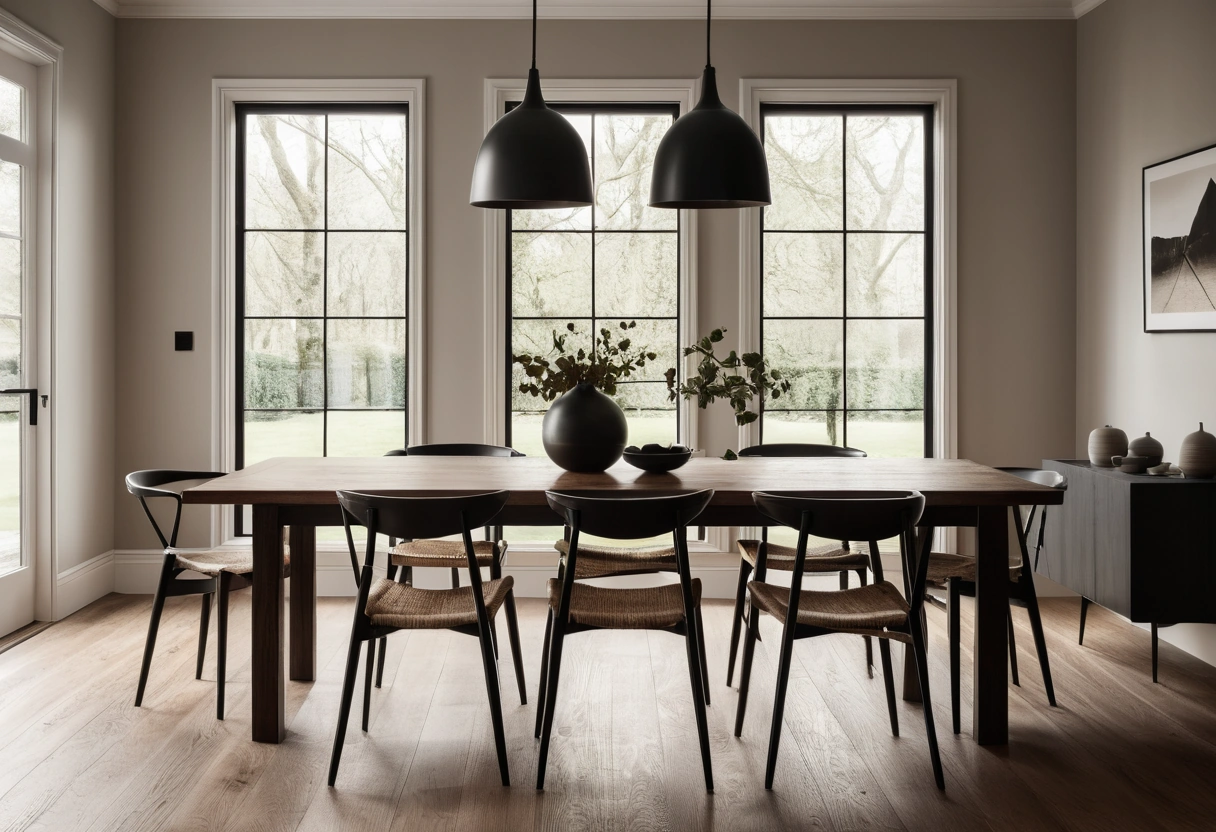
One dominant plus one or two supporting tones is the working limit. Past three, a room stops reading as designed and starts reading as accumulated. Borrow the proportion instinct of the 60-30-10 rule: roughly 60 percent of the visible wood in the dominant tone, 30 in the second, 10 as an accent.
Then apply the repeat rule: any supporting wood should appear at least twice in the room. A walnut mirror frame earns a walnut bowl or lamp base across the room; chair legs echo a picture ledge. One orphan wood reads as an accident, not an accent. The opposite failure is matching everything: the bought-the-set bedroom where bed, dresser, and nightstands share one finish flattens the room to a catalog page. Deliberate contrast is the goal.
Put real contrast between floor and furniture
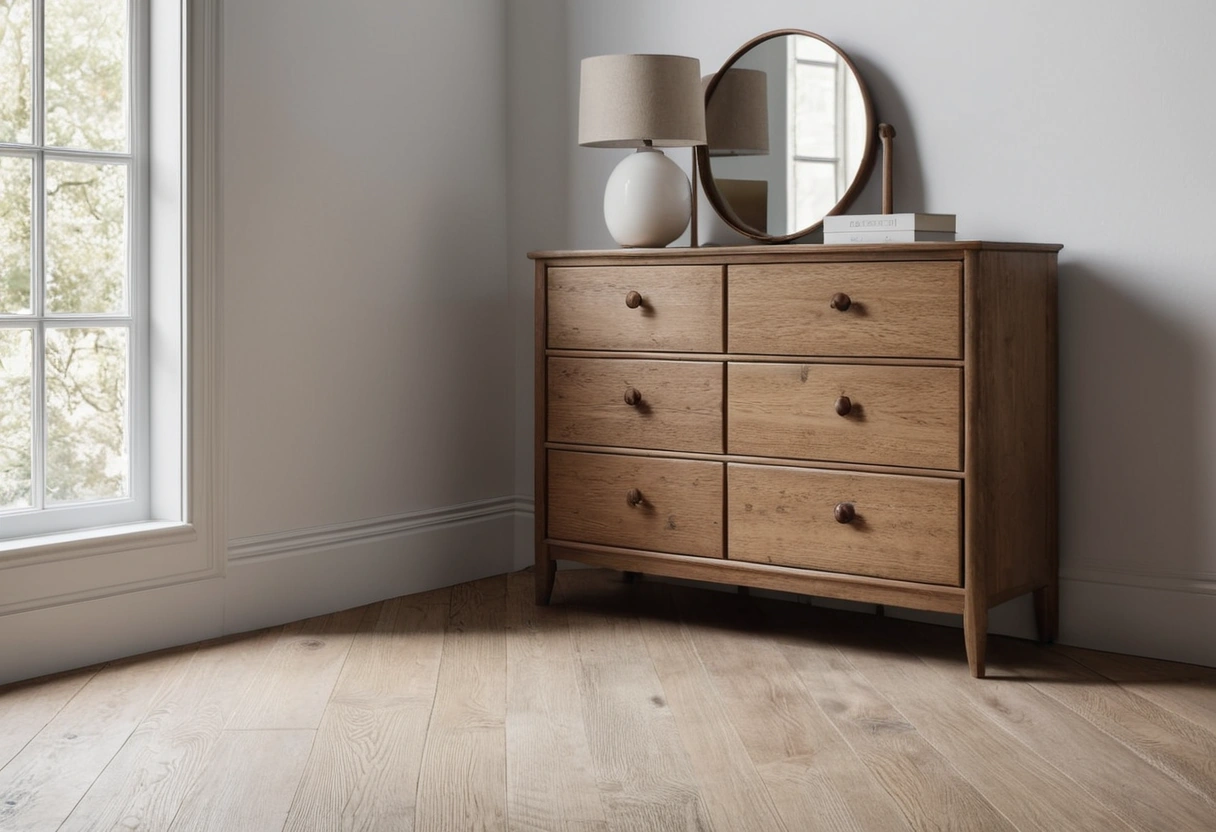
Furniture sitting on a wood floor should be clearly lighter or clearly darker than the boards, by at least two or three value steps. The killer is the near miss: a table stained two shades off the floor, in the same undertone, looks like the same wood that faded. If you can’t get honest contrast, change direction entirely, a painted piece, metal, glass, or upholstery.
The pairings that reliably work: dark floors under light and mid-tone furniture, pale oak floors under walnut or espresso pieces, mid-tone floors under either extreme. What you’re avoiding is furniture that hovers within a shade of the boards below it. Renters get the same result in reverse: when the floor can’t change, choose the two furniture tones against it and let the landlord’s oak play dominant whether it deserves to or not.
Buffers: rugs, paint, and upholstery
When two woods argue and neither is leaving, put something between them. A rug is the classic buffer, separating table and chair legs from the floorboards; size it by the coverage math in our rug size guide so the furniture actually sits on it. Pale, quiet wall paint gives a busy wood mix visual rest. An upholstered bench breaks a chain of wood dining chairs, a runner cuts wood-on-wood contact on a dresser top, and a painted bookcase resets a wall that was tipping into lumberyard.
The same primary-plus-accent thinking runs the hardware and fixtures in the room; see our method for mixing metal finishes for the metal side of the system. The two follow the same grammar: one dominant voice, deliberate repeats, no near misses.
The five-step room check
- Name the dominant wood, usually the floor, and identify its undertone: warm, cool, or neutral.
- Audition every new wood next to it in daylight, sample on sample, never from memory.
- Cap the room at three tones, in roughly 60-30-10 proportions.
- Repeat each supporting tone at least twice, and keep two or three value steps between floor and furniture. Kill near-miss matches.
- When two woods clash and both stay, buffer with a rug, paint, or fabric.