Rug Size for a King Bed: Border Math, Nightstand Clearance, and Room Width
A standard 8x10 rug leaves exactly 10 inches of visible border on each side of a 76-inch king mattress. That narrow strip puts your feet on bare floor the moment you swing out of bed. Sizing a bedroom rug is a perimeter clearance problem, not just a style choice. The right dimensions depend entirely on your room width, nightstand depth, and walking paths. See also: living room layout calculations by TV size and sofa depth.
Contents
Key takeaways
-
A 9x12 rug is the standard minimum for a US king bed when you want visible borders on three sides.
-
Calculate rug width by adding the 76-inch mattress width, twice your chosen side border, and any nightstand overhang beyond the mattress edge.
-
Plan for 24 to 36 inches of rug extending past the foot of the bed.
-
Leave at least 24 inches of walkable space between the rug edge and the wall in a primary bedroom.
-
Use this reference to match your room and layout preference to a manufactured rug size.
What rug size fits under a king bed with proper borders?
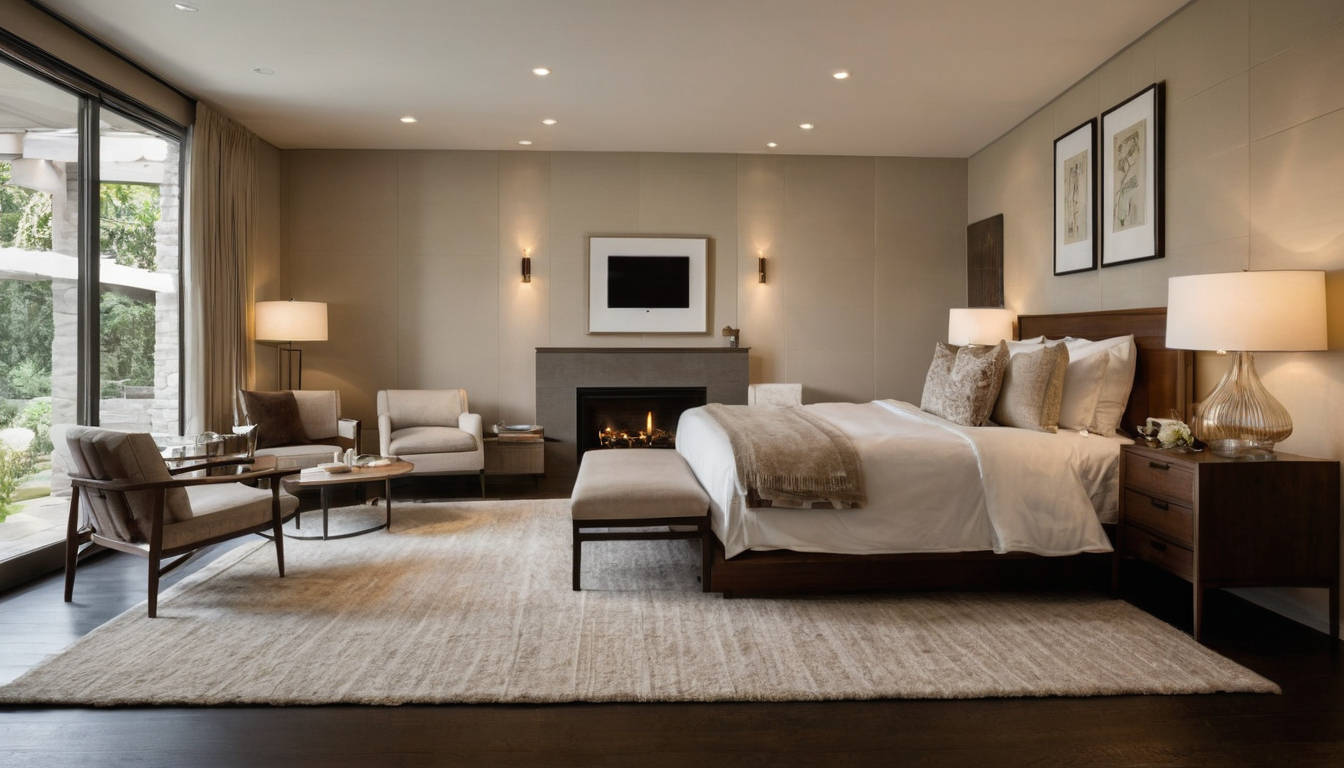
A 9x12 rug is the standard minimum for a US king bed when you want visible borders on three sides. An 8x10 rug works only if you accept minimal side exposure or place it starting below the nightstands. The right rug size for a king bed depends on your room width and nightstand depth.
A standard US king mattress measures 76 inches wide by 80 inches long. An 8x10 rug measures 96 inches by 120 inches. Subtract the mattress width from the rug width, and you get 20 inches of total border. Divide that by two, and each side shows exactly 10 inches of rug next to the bed frame. That narrow strip barely covers the floor where your feet land. It leaves the nightstands on bare hardwood or carpet, creating a disjointed bedroom layout.
A 9x12 rug changes the math. The 108-inch width minus the 76-inch mattress leaves 32 inches total, or 16 inches per side. That extra width gives your feet a proper landing zone and visually anchors the bed frame. The 144-inch length extends well past the foot of the mattress, leaving enough exposed rug to define the walking path at the end of the bed.
Nightstand depth can override a default rug choice because furniture dimensions vary. A typical nightstand runs 18 to 24 inches deep. If your nightstands sit entirely on the rug, the textile must extend beyond the outer edges of those tables. Before placing a 9x12 rug under the bed and both nightstands, measure the sleeping area’s total footprint. A wider nightstand setup might push the required rug width past 108 inches, forcing a jump to a 10x14 size.
What rug size fits under a king bed with proper borders.
Room width sets the final limit. Residential design conventions call for at least 18 inches of exposed floor between the rug edge and the wall, though 24 inches provides a more comfortable visual margin. A 9x12 rug needs a room at least 12 feet wide to maintain those clearances without crowding the walls. Narrower rooms require compromises on either the border size or the walkway clearance.
To get the exact numbers before you shop, start with the formula for king size bed rug width.
How do you calculate rug width for a king size bed?
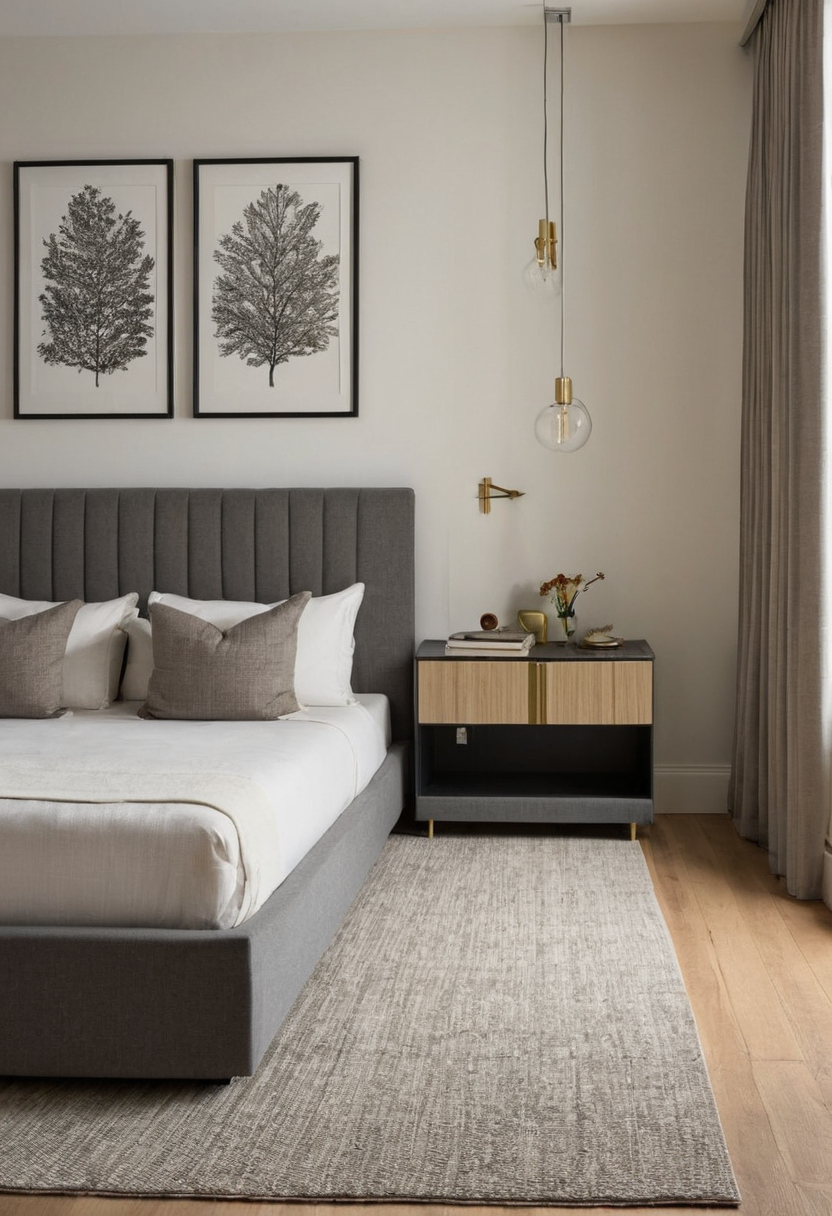
Calculate rug width by adding the 76-inch mattress width, twice your chosen side border, and any nightstand overhang beyond the mattress edge. For a 24-inch side border with nightstands flush to the mattress, you need 76 + 24 + 24 = 124 inches. That makes a 10-foot width your mathematical minimum for full coverage.
How do you calculate rug width for a king size bed.
Follow these steps to find your required width:
-
Start with the standard US king mattress width of 76 inches.
-
Choose your exposed floor border on each side. A 24-inch border gives comfortable walking space. An 18-inch border works in tight rooms.
-
Multiply that border number by two.
-
Measure how far your nightstands extend past the mattress edge. Standard US nightstands run 16 to 20 inches deep. If the mattress is 30 inches from the wall and your nightstand is 18 inches deep, the nightstand sits flush or slightly inside the mattress line. If you want the rug to extend under the full nightstand depth, add those extra inches to the total width.
-
Add the mattress width, the doubled border, and the nightstand overhang.
-
Round up to the nearest standard rug dimension.
With ten inches of rug next to a king bed, your feet hit bare floor the moment you swing out of bed. The 10-inch strip also fails to reach under standard nightstands, which typically measure 16 to 20 inches deep. Nightstand legs will sit directly on the hardwood or carpet while only the inner edge of the bed frame touches the rug. This creates a floating furniture look and causes the rug to shift when you walk near the bed.
The arithmetic shows why a 9x12 rug is the practical starting point for a king size bed. A 9-foot width provides 108 inches. Subtract 76 inches for the mattress. The remaining 32 inches split into 16 inches per side. Sixteen inches clears the mattress edge but still falls short of covering a full 18-inch nightstand depth. Reaching a true 24-inch border on both sides requires at least 124 inches of total width, pushing you toward a 10-foot or 11-foot rug dimension.
- All four nightstand legs on the rug. This visually anchors the furniture grouping. Add the full nightstand depth beyond the mattress edge to your width formula. This approach requires the widest rug.
Choose the convention that fits your room width before buying. Once the side borders and nightstand positions are set, calculate the length next.
How much rug should extend past the foot of a king bed?
Plan for 24 to 36 inches of rug extending past the foot of the bed. This gives you a comfortable landing zone when you step out. To find your required rug length, add the distance from the headboard wall to the foot of the mattress, then add your chosen foot border. A standard setup usually requires 10 to 12 feet of length.
The landing zone is the strip of rug your feet hit first in the morning. Twenty-four inches covers one full stride. Thirty-six inches provides room for a bench or a deeper step without touching bare floor. Anything less than 24 inches puts you off the rug before you stand up straight.
A US king mattress measures 80 inches long. Most bed frames and platform rails add another 2 to 5 inches at the foot. That puts the total distance from the headboard wall to the outer frame edge between 82 and 85 inches. Add your 24-inch minimum foot border. The result is 106 to 109 inches, so you need just under 9 feet of rug length starting exactly at the wall.
Few rugs start flush against a headboard wall. A gap of 2 to 4 inches behind the headboard is common. That gap pushes the required rug length closer to 113 inches. A 9x12 rug covers this span with a few inches to spare. A 10x14 rug extends the foot border well past 36 inches and works better if you want a bench sitting fully on the textile.
The foot border calculation assumes the rug runs all the way back to the headboard wall. Stopping the rug halfway under the mattress changes the math entirely and shortens the visible foot extension. How far the rug reaches toward the walls brings up the next constraint.
What are the minimum clearances around a king bed and rug?
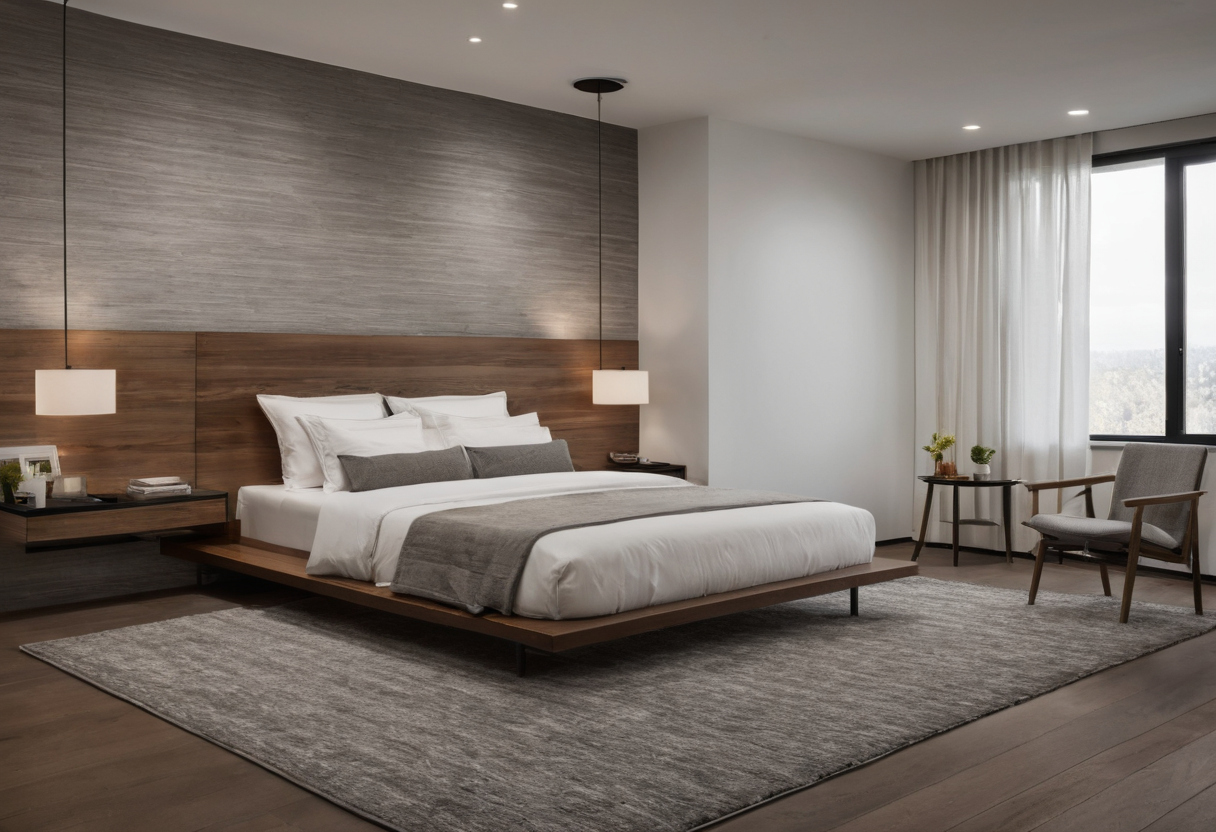
Leave at least 24 inches of walkable space between the rug edge and the wall in a primary bedroom. If your room is tighter, 18 inches is the functional minimum for passing. These clearances determine whether a larger rug fits your room or forces furniture against walls.
Bedroom circulation paths follow the same logic as kitchen work aisles. A person needs roughly 24 inches to walk comfortably past a bed frame without turning sideways. Standard residential interior design practice treats 36 inches as ideal for primary traffic routes where two people might pass. For secondary paths along the sides of a bed, 24 inches works well. The 18-inch threshold is an absolute floor. Anything narrower forces you to shuffle past dressers or nightstands.
The rug border matters because stepping off a thick pile onto bare hardwood feels abrupt when the landing strip is only a few inches wide. Your foot needs enough exposed floor to register the transition before hitting baseboard or furniture. A 24-inch gap gives you that physical buffer. It also leaves enough bare floor visible for the rug to read as a deliberate zone rather than wall-to-wall carpeting cut short.
Typical US primary bedrooms range from 12 by 14 feet to 14 by 16 feet. A 12-foot-wide room measures 144 inches across. Subtract a 76-inch king mattress centered on the wall, and you have 68 inches left. Divide that by two, and each side gets 34 inches of total floor space. If you use 24 inches for the walking path, only 10 inches remain for the rug to extend beyond the mattress edge on each side. That math shows why room dimensions override bed dimensions when sizing a rug.
Apply this to a 144-inch-wide room with a target 24-inch clearance on both sides. Multiply 24 by 2 to get 48 inches. Subtract 48 from 144. The result is 96 inches, or exactly 8 feet. An 8-foot-wide rug is the largest option that preserves a 24-inch walking path in a 12-foot room. Choose a 9-foot rug in that same space, and your clearance drops to 18 inches per side. You reach the functional minimum immediately.
Length follows the same logic. Measure the distance from the headboard wall to the opposite wall. Subtract the preferred clearance at the foot of the bed. The remaining length is your maximum rug dimension from the headboard line forward. If your room is 168 inches long and you want 24 inches of exposed floor past the rug edge at the doorway, the rug can run no longer than 144 inches from the wall behind the headboard.
This perimeter calculation helps prevent the common mistake of buying a rug based solely on mattress width. The bed establishes the floor requirement. The walls establish the ceiling. Once you know both boundaries, you can match standard manufactured sizes to your layout.
What are the minimum clearances around a king bed and rug.
Which standard rug dimensions match specific king bed layouts?
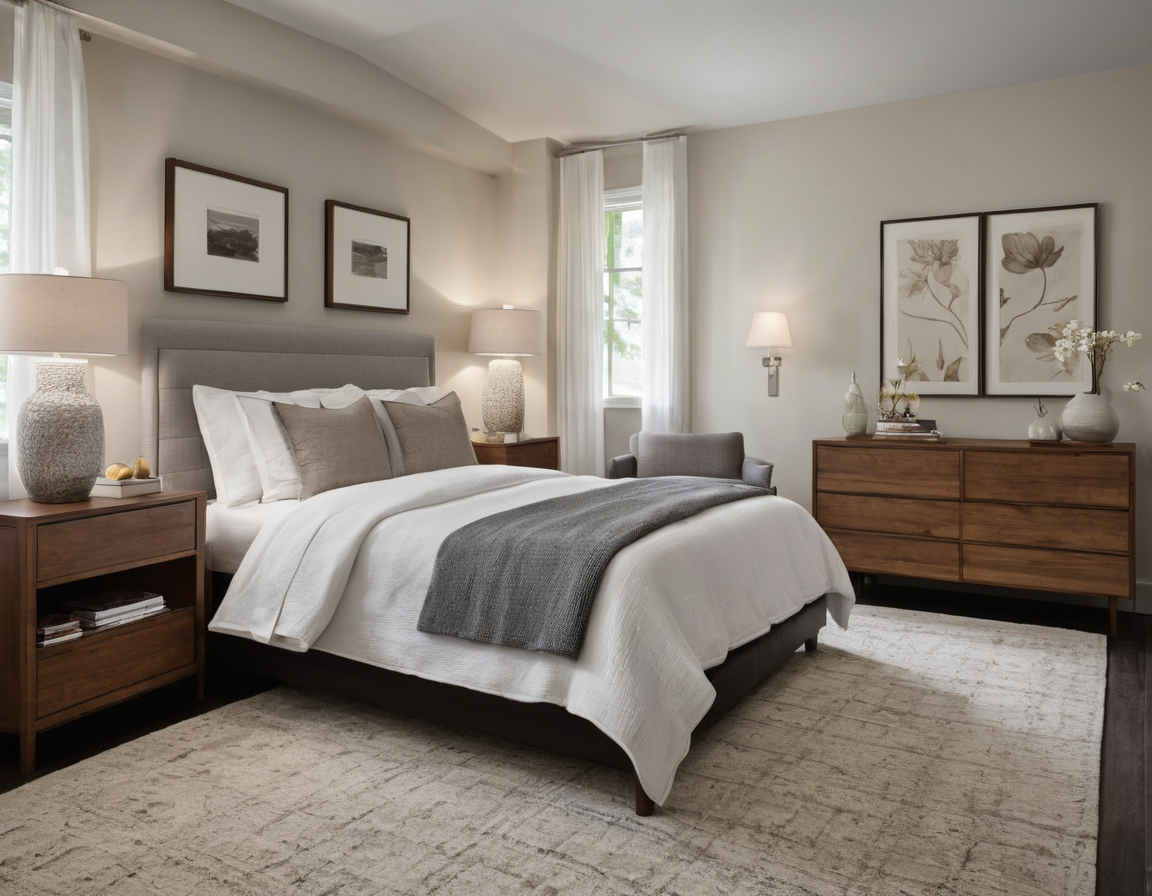
Use this reference to match your room and layout preference to a manufactured rug size. An 8x10 suits a narrow room where the rug starts below the nightstands. A 9x12 covers the bed and nightstands with modest borders. A 10x14 provides generous coverage for large primary suites with seating areas at the foot.
Which standard rug dimensions match specific king bed layouts.
This perimeter clearance method also applies beyond the bedroom. The same logic drives living room layout calculations by TV size and sofa depth, where furniture footprints dictate the rug boundary rather than the other way around.
A standard US king mattress measures 76 by 80 inches. Those dimensions change entirely if your bed frame uses a different mattress profile. The next section covers how to adjust these rug formulas for a California king.
How do you adjust rug sizing for California king beds?
A California king measures 72 inches wide by 84 inches long. The narrower width reduces your side border requirement slightly, but the extra four inches of length call for a longer rug to maintain the same foot clearance. Use the same formulas with 72 inches as your base width instead of 76.
A standard US king bed measures 76 inches wide by 80 inches long (bed size reference). Swapping that mattress for a California king changes the perimeter math in two directions. The width drops by four inches. The length grows by four inches. These shifts affect which manufactured rug sizes fit your bedroom floor.
The four-inch length difference is the deciding factor. A 9x12 rug covers 108 inches of length. That leaves only 24 inches past the foot of an 84-inch California king if the rug starts flush with the mattress top. The same rug allows 28 inches past a standard 80-inch king. That missing four inches noticeably shrinks your landing zone when you step out of bed.
For a California king, start by measuring the 84-inch length and adding your required foot clearance. Set the length before calculating the width. Calculate the required rug size from mattress width, nightstand depth, and wall clearances before shopping to avoid returned rugs and wasted delivery fees.
For more on this topic, see other guides on this site.